Site non officiel

Borgia Apartments frescoed papal rooms

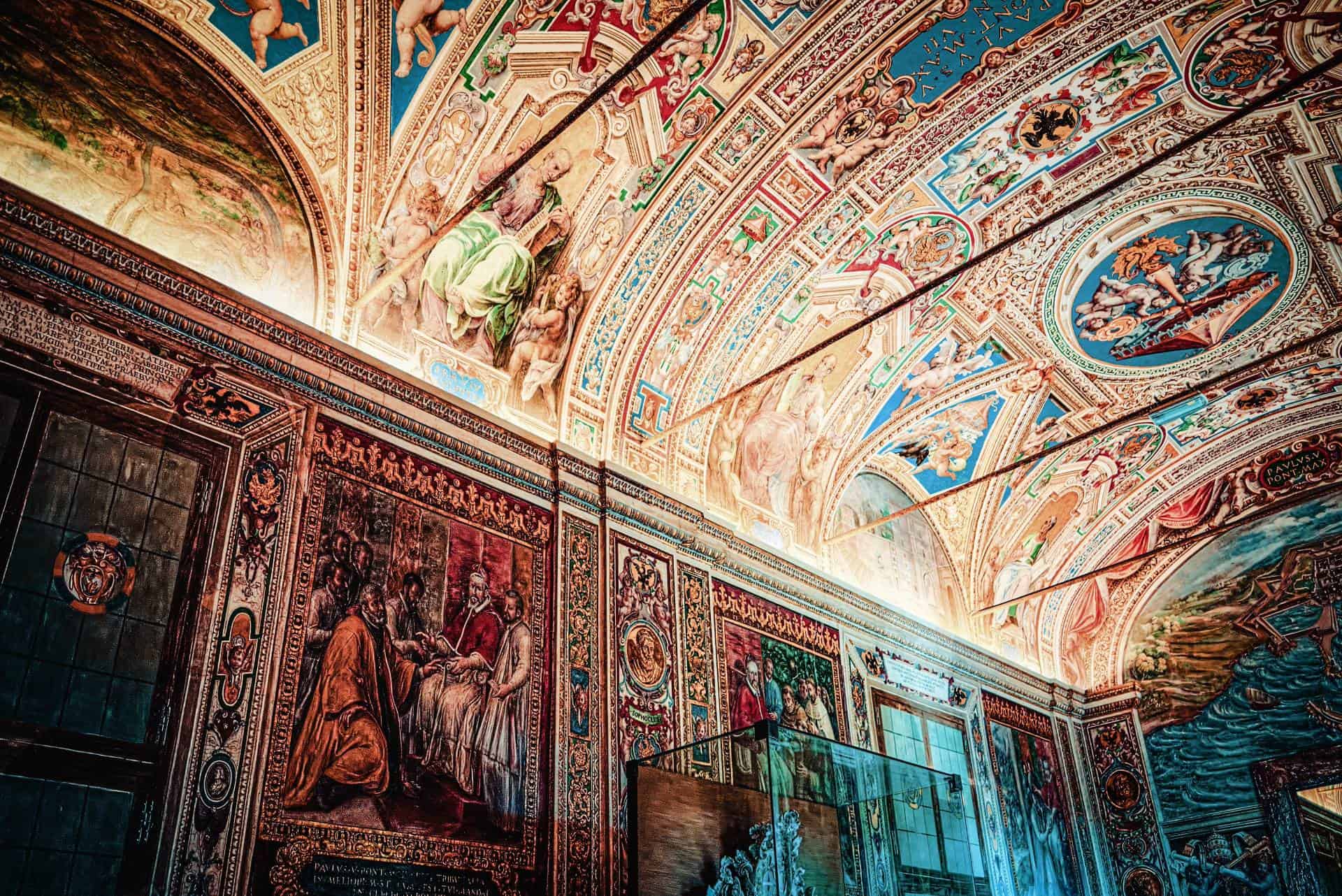
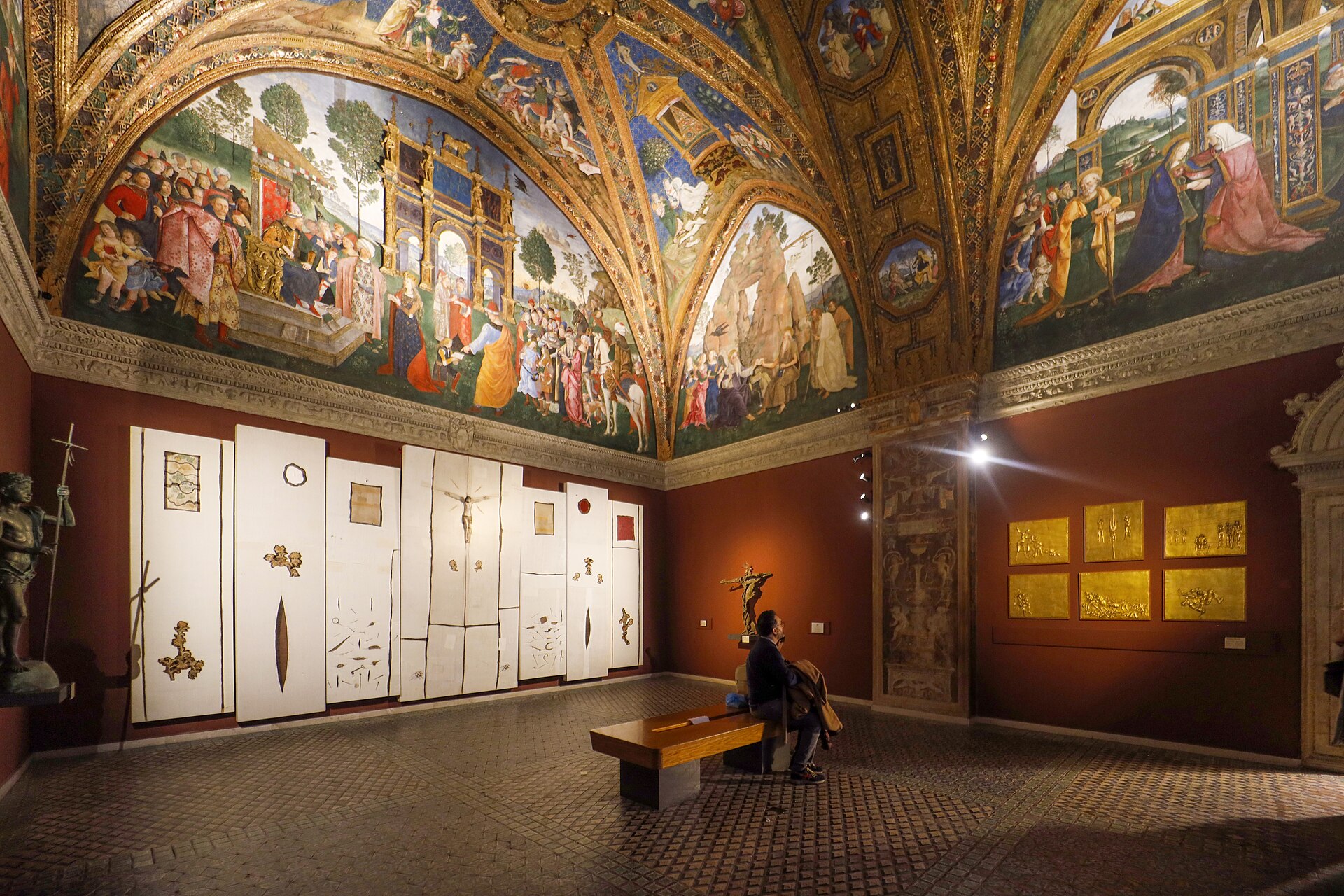
Les Appartements Borgia dans le Musées du Vatican sont une série de pièces commandées par Pape Alexandre VICes chambres ont été construites à la fin du XVe siècle par le cardinal de Rome, membre de la tristement célèbre famille Borgia. Ces chambres somptueusement décorées servaient à l'origine d'appartements privés pour les papes et sont réputées pour leurs fresques époustouflantes peintes par l'artiste italien Pinturicchio et son atelier. Les fresques représentent des thèmes religieux, mythologiques et allégoriques, mêlant le symbolisme chrétien aux techniques artistiques de la Renaissance.

Les pièces comprennent la salle des Mystères de la foi, la salle des Sibylles et la salle des Saints, chacune avec des fresques complexes au plafond et des peintures murales qui illustrent des histoires et des personnages sacrés. Aujourd'hui, les appartements Borgia font partie de la visite des musées du Vatican et abritent une partie de la collection d'art religieux moderne, offrant aux visiteurs un mélange fascinant d'art de la Renaissance et d'œuvres spirituelles modernes dans un cadre historique. Les appartements reflètent la grandeur et la richesse culturelle de la cour papale de la Renaissance tout en offrant un aperçu de l'héritage artistique de l'une des familles papales les plus tristement célèbres de l'histoire.

Informations utiles

Heures d'ouverture :

  • Du lundi au samedi : 9h00 à 18h00 (dernière entrée à 16h00).
  • Dernier dimanche du mois : entrée libre de 9h00 à 14h00 (dernière entrée à 12h30).
  • Jours de fermeture : Dimanche (sauf le dernier dimanche du mois) et certaines fêtes religieuses comme Noël et Pâques.

Billets :

  • Il est conseillé d'acheter les billets en ligne à l'avance pour éviter les longues files d'attente.
  • Les billets peuvent être réservés avec une entrée programmée pour réduire les temps d'attente.
  • Des réductions sont accordées aux enfants, aux étudiants et aux groupes.
  • Des audioguides et des visites guidées sont disponibles en plusieurs langues.

Comment s'y rendre

Les appartements Borgia sont situés dans les musées du Vatican, dans le palais apostolique.

L'histoire

Les Appartements Borgia are named for Rodrigo de Borja—Pape Alexandre VI—who used this part of the papal residence during his pontificate (1492–1503). The Vatican Museums describe the Apartments as six monumental spaces renovated and decorated at Alexander VI’s request, and they identify the six rooms by name: the Room of the Sibyls, the Room of the Creed, the Room of the Liberal Arts, the Room of the Saints, the Room of the Mysteries, and the Room of the Pontiffs.

After Alexander VI’s death, the Apartments were abandoned by Jules II, who moved to the rooms above—now known as the Chambres Raphaël. Over the centuries the spaces were reused for different functions, and only at the end of the 1800s were they opened to the public after restoration, according to the Vatican Museums’ account.

The Vatican Museums also explain that the pictorial decoration of the “secret rooms” was entrusted to the Umbrian painter Pinturicchio (Bernardino di Betto) and that the work was completed rapidly between the autumn of 1492 and the beginning of 1494 with support from a team of artists. Today, the Vatican Museums note that these rooms house part of the Vatican Museums’ Collection of Modern and Contemporary Art, inaugurated by Paul VI in 1973—an unusual and fascinating layering of Renaissance fresco environment with later collecting history.

Les Appartements Borgia are named for Rodrigo de Borja—Pape Alexandre VI—who used this part of the papal residence during his pontificate (1492–1503). The Vatican Museums describe the Apartments as six monumental spaces renovated and decorated at Alexander VI’s request, and they identify the six rooms by name: the Room of the Sibyls, the Room of the Creed, the Room of the Liberal Arts, the Room of the Saints, the Room of the Mysteries, and the Room of the Pontiffs.

After Alexander VI’s death, the Apartments were abandoned by Jules II, who moved to the rooms above—now known as the Chambres Raphaël. Over the centuries the spaces were reused for different functions, and only at the end of the 1800s were they opened to the public after restoration, according to the Vatican Museums’ account.

The Vatican Museums also explain that the pictorial decoration of the “secret rooms” was entrusted to the Umbrian painter Pinturicchio (Bernardino di Betto) and that the work was completed rapidly between the autumn of 1492 and the beginning of 1494 with support from a team of artists. Today, the Vatican Museums note that these rooms house part of the Vatican Museums’ Collection of Modern and Contemporary Art, inaugurated by Paul VI in 1973—an unusual and fascinating layering of Renaissance fresco environment with later collecting history.

Afficher plus

Commentaires

Conseils

Les meilleures expériences des musées du Vatican

Retour en haut