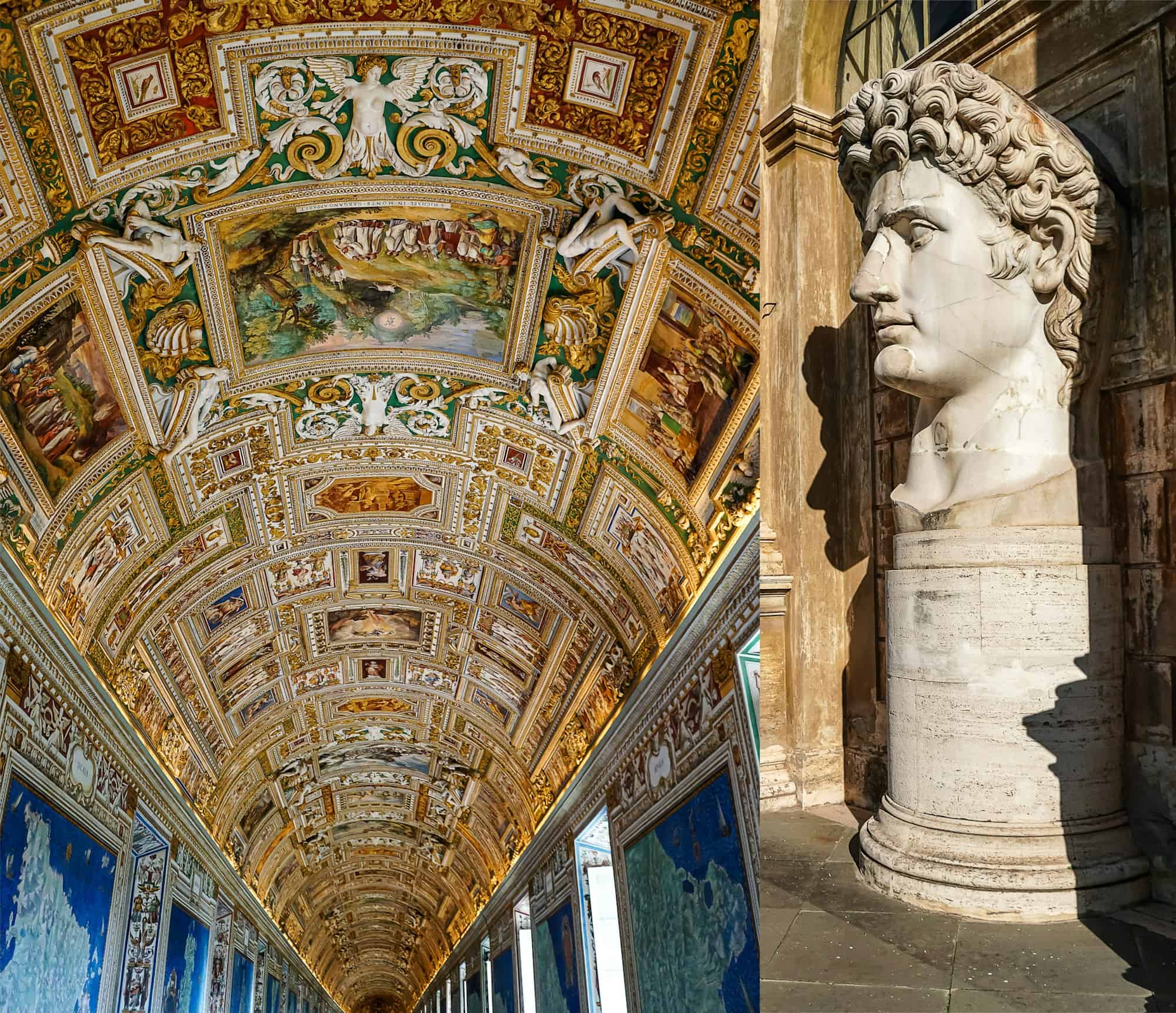
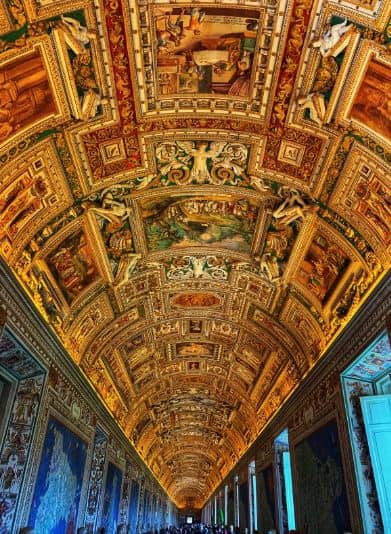
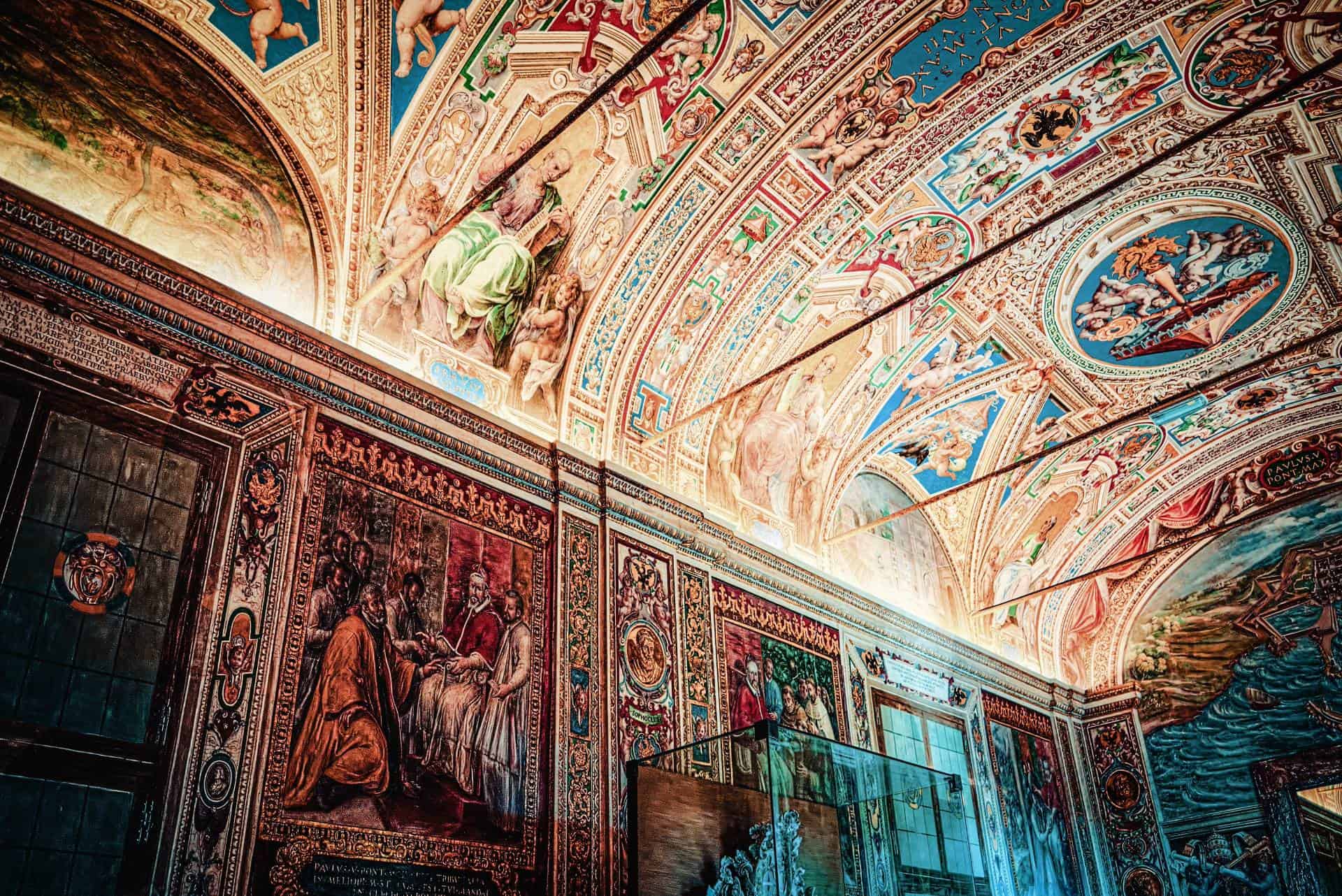
O Apartamentos Papal do Museus do Vaticano, also known as the Quartos Raphael, are a complex of rooms decorated for the popes over the centuries. These spaces, famous for the frescoes by the Renaissance master Raphael, are among the Vatican’s most precious masterpieces. Each room is a stunning display of art and history, with scenes that celebrate religion, philosophy, and the culture of the time. Visiting them allows you to immerse yourself in the atmosphere of the Renaissance papal court, surrounded by artistic treasures of inestimable value.
Raphael in Julius II Rooms
Informações úteis
Horário de funcionamento:
- Monday – Saturday: 9:00 AM to 6:00 PM (last entry at 4:00 PM).
- Último domingo do mês: entrada gratuita das 9:00 às 14:00 (última entrada às 12:30).
- Dias de fechamento: Domingos (exceto o último domingo do mês) e alguns feriados religiosos, como Natal e Páscoa.
Ingressos:
- É aconselhável comprar ingressos on-line com antecedência para evitar longas filas.
- Os ingressos podem ser reservados com entrada programada para reduzir o tempo de espera.
- Há descontos disponíveis para crianças, estudantes e grupos.
- Audioguias e visitas guiadas estão disponíveis em vários idiomas.
Como chegar lá
The Papal Apartments, known as the Raphael Rooms, are located within the Vatican Museums, specifically in the Vatican Apostolic Palace.
Histórico
O Apartamentos Papal most visitors encounter inside the Vatican Museums are closely tied to the public apartments of Papa Júlio II. In these rooms, the papacy used art as a language of authority—an environment where learning, faith, and power could be made visible through image, symbolism, and architectural illusion. That is why the experience feels different from a standard gallery: the rooms were designed to speak on behalf of the institution, not simply to display “beautiful things.”
The defining chapter here is the work of Rafael, commissioned by Julius II to cover the apartments with frescoes. The best-known scene, the School of Athens, centers on Plato e Aristotle in debate, surrounded by other great minds of antiquity. The sophistication lies in the way the fresco uses perspective, composition, and symbols to stage knowledge as something ordered and authoritative—exactly the kind of statement that mattered inside a papal setting.
These apartments also belong to a larger Renaissance moment shaped by artistic rivalry and ambition. Raphael was a contemporary of Michelangelo, and the Vatican visit places these peaks of Renaissance art within a single sequence: frescoed papal rooms leading onward toward the Capela Sistina. Seen this way, the Papal Apartments are not just a highlight on the route. They are a hinge in the Vatican’s cultural narrative, where private power becomes public image through art that still holds attention, centuries later.
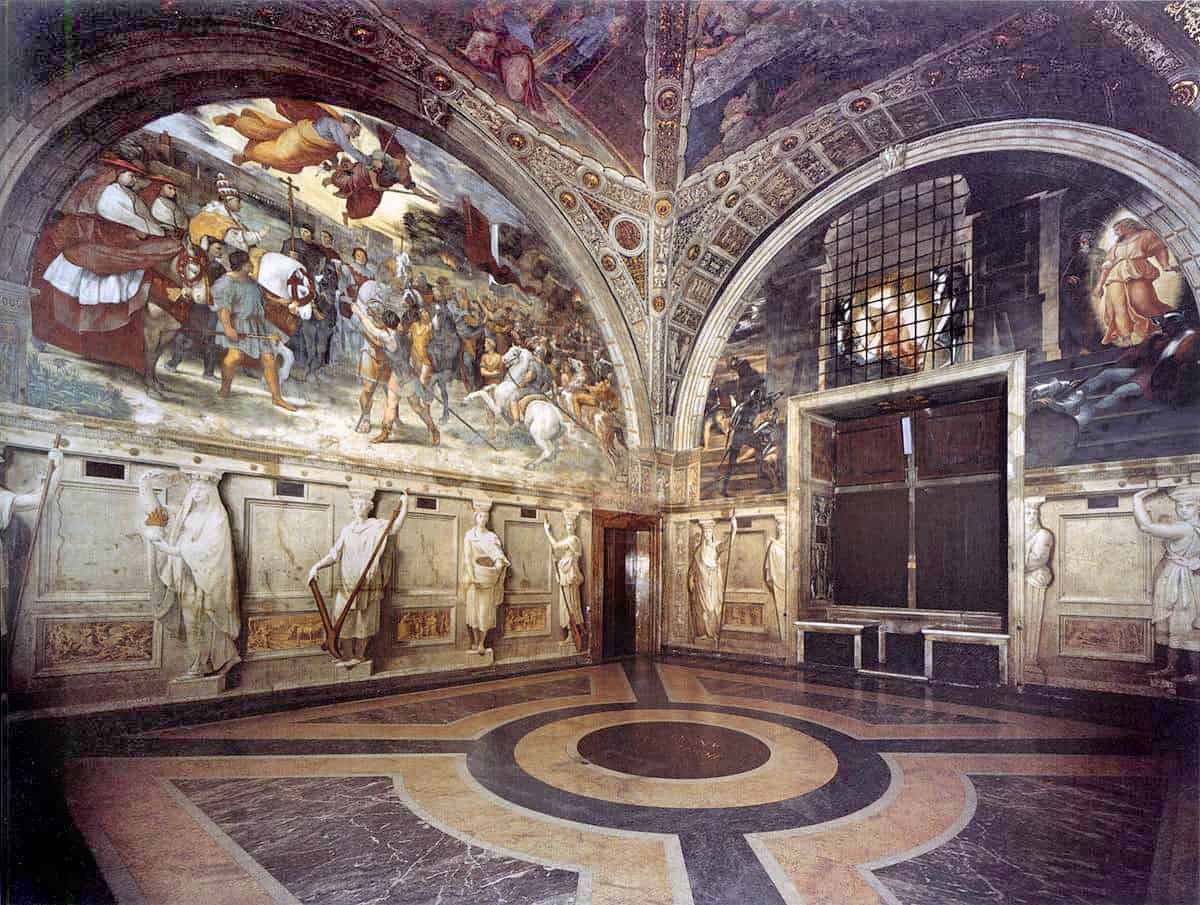
O Apartamentos Papal most visitors encounter inside the Vatican Museums are closely tied to the public apartments of Papa Júlio II. In these rooms, the papacy used art as a language of authority—an environment where learning, faith, and power could be made visible through image, symbolism, and architectural illusion. That is why the experience feels different from a standard gallery: the rooms were designed to speak on behalf of the institution, not simply to display “beautiful things.”
The defining chapter here is the work of Rafael, commissioned by Julius II to cover the apartments with frescoes. The best-known scene, the School of Athens, centers on Plato e Aristotle in debate, surrounded by other great minds of antiquity. The sophistication lies in the way the fresco uses perspective, composition, and symbols to stage knowledge as something ordered and authoritative—exactly the kind of statement that mattered inside a papal setting.
These apartments also belong to a larger Renaissance moment shaped by artistic rivalry and ambition. Raphael was a contemporary of Michelangelo, and the Vatican visit places these peaks of Renaissance art within a single sequence: frescoed papal rooms leading onward toward the Capela Sistina. Seen this way, the Papal Apartments are not just a highlight on the route. They are a hinge in the Vatican’s cultural narrative, where private power becomes public image through art that still holds attention, centuries later.

Mostrar mais
Comentários
A Masterpiece of Renaissance Art - James W.
"The Papal Apartments are an absolute must-see for anyone visiting the Vatican Museums. The frescoes by Raphael are breathtaking, with every wall telling a story of religion, philosophy, and culture. Walking through these rooms is like stepping into a piece of history. The vibrant colors, intricate details, and powerful imagery make these rooms one of the highlights of the entire museum. It’s a truly awe-inspiring experience!"
Incredible Art and History Combined – Sophia L.
"Visiting the Raphael Rooms was one of the most memorable parts of our Vatican tour. The artwork is simply stunning, and it's amazing to think that these rooms were once used by popes. The rich history combined with Raphael's genius makes for an unforgettable experience. We spent a good amount of time in each room, just admiring the details. I highly recommend taking a guided tour to fully appreciate the historical context of each fresco."
A True Hidden Gem of the Vatican Museums – Michael P.
"While everyone talks about the Sistine Chapel, the Papal Apartments often get overlooked – but they shouldn’t be! These rooms are equally fascinating and showcase Raphael’s incredible talent. The way he captured depth and emotion is remarkable. The rooms are slightly less crowded than other areas, which allowed us to take in the beauty in a more relaxed atmosphere. I could have spent hours just gazing at the artistry. Definitely a hidden gem within the Vatican Museums!"
Dicas
Use a two-pass method in the Raphael Rooms: First, do a steady walk-through to understand the room as a whole and locate the scenes you care about most. Then return to one wall—ideally the School of Athens, and stay still for a full minute before moving closer. Fresco rooms reward repetition because the perspective and symbols reveal themselves in layers. This approach keeps the Papal Apartments from becoming a quick photo stop and turns them into a memory you can actually describe afterward.
Protect your day with entry-ready logistics: The Vatican Museums begin with an airport-style security check and an enforced dress code (knees and shoulders covered). If you arrive unprepared, you waste time and start stressed, and stress makes you rush the apartments. Wear compliant clothing, carry a small bag, and keep your ticket accessible. The calmer your first 30 minutes are, the more attention you’ll have left for the fresco details that make the Papal Apartments worth your time.
Don’t save the apartments for when you’re exhausted: Many visitors push forward toward the Sistine Chapel and only slow down when they’re already tired. Flip the logic. Treat the Papal Apartments as your planned slow chapter earlier in the route, while your eyes are fresh. After you’ve taken time here, the rest of the Vatican visit feels easier because you stop trying to see everything equally and start choosing what deserves focus.
Create your own “quiet pocket” instead of fighting crowds: In busy periods, standing still in a famous room can feel stressful. Instead of fighting the flow, step slightly aside where possible, let groups pass, then return to your chosen viewing angle. Even a small pocket of calm is enough to see the structure of the frescoes and notice details. This technique improves both your experience and your ability to move respectfully in the space, especially in rooms that attract constant attention.