The story Private Collections of the Museus do Vaticano does not begin as a public museum story at all. It begins behind walls, within papal apartments, gardens, palaces, and restricted courtyards, where generations of popes gathered works of art not only for beauty, but for authority, learning, diplomacy, and devotion. Before the Vatican Museums became one of the world’s most visited cultural institutions, they were shaped by deeply personal decisions made by the papacy. These were collections formed in private, expanded through taste, ambition, politics, and spiritual vision. They were not assembled according to modern museum logic. They were assembled to express prestige, continuity, and the universal reach of the Church.
That private origin still defines the character of the museums today. Unlike many national museums built around civic identity, the Vatican collections emerged from the selective eye of individual pontiffs and their advisers. Each acquisition, commission, rescue, or display reflected an idea of what the papal court wanted to preserve and project. Ancient sculpture stood beside Christian masterpieces, maps beside tapestries, archaeological finds beside devotional painting. What may seem today like a vast and coherent institution was, in reality, created piece by piece by men who understood art as both inheritance and instrument.
The phrase “Tesori Pontifici,” or pontifical treasures, captures this layered history perfectly. These works were treasures in the literal sense, but they were also symbols of intellectual stewardship. To collect was to govern memory. To preserve antiquity was to claim a connection to Roma, empire, and civilization itself. To sponsor great painters and architects was to affirm that the Church was not merely a guardian of faith, but also a guardian of beauty and knowledge. The Vatican Museums grew from this conviction, and that is why their collections feel so distinctive even now.
How Private Vatican Collections Built a Universal Museum
One of the most decisive moments in this history came with the rediscovery and display of celebrated classical sculpture. When the Laocoön was unearthed in the early sixteenth century and brought into papal possession, it was more than a famous archaeological event. It became a statement. By placing such a work within the orbit of the papal court, the Vatican signaled that it would not leave the legacy of antiquity to princes, scholars, or collectors elsewhere. It would become a central custodian of the ancient world. The sculpture’s emotional force, technical brilliance, and immediate influence on Renaissance artists made it an ideal emblem of this ambition.
The development of the Belvedere Courtyard reinforced that vision. It became one of the earliest and most influential spaces in which classical sculpture was displayed not merely as decoration, but as a cultural program. Here, selected works were arranged in a setting that encouraged admiration, study, and comparison. Though still private in many respects, such spaces anticipated the modern museum by transforming collecting into curated display. The papacy was no longer just accumulating objects. It was shaping a narrative about civilization, taste, and continuity, with itself at the center of that narrative.
This approach continued under later popes who expanded collections through excavation, purchase, patronage, and diplomacy. The Vatican’s holdings were not built in one burst of enthusiasm, but through a steady pattern of intervention. Art moved into the papal sphere because it was discovered in the ground, offered as tribute, commissioned for sacred purposes, or recognized as too important to lose. The result was a collection that reflected not only artistic genius, but also the mechanisms of power. The Vatican Museums are therefore as much a history of selection as they are a history of creation.
A figure such as Julius II is crucial in this story because he understood art as an extension of papal authority. His patronage helped establish the Vatican as an artistic capital, and his collecting instincts gave momentum to the transformation of private possession into institutional prestige. This did not mean opening everything immediately to the public in the modern democratic sense, but it did mean imagining the papal collection as something larger than a household treasure room. The papal court began to see itself as responsible for preserving and presenting works that mattered beyond a single lifetime or reign.
That same impulse shaped the creation of museums dedicated to different civilizations and artistic traditions. The growth of the Pio-Clementino Museum revealed how private papal collecting evolved into more organized forms of display. Sculptures were no longer valued only as individual marvels. They were arranged into broader conversations about style, antiquity, mythology, and the ideal human form. This marked a turning point, because it suggested that the Vatican’s collections could educate as well as impress. The museum became a place where artistic and historical understanding could be cultivated through access to carefully assembled treasures.
Why Pontifical Treasures Still Define the Vatican Experience
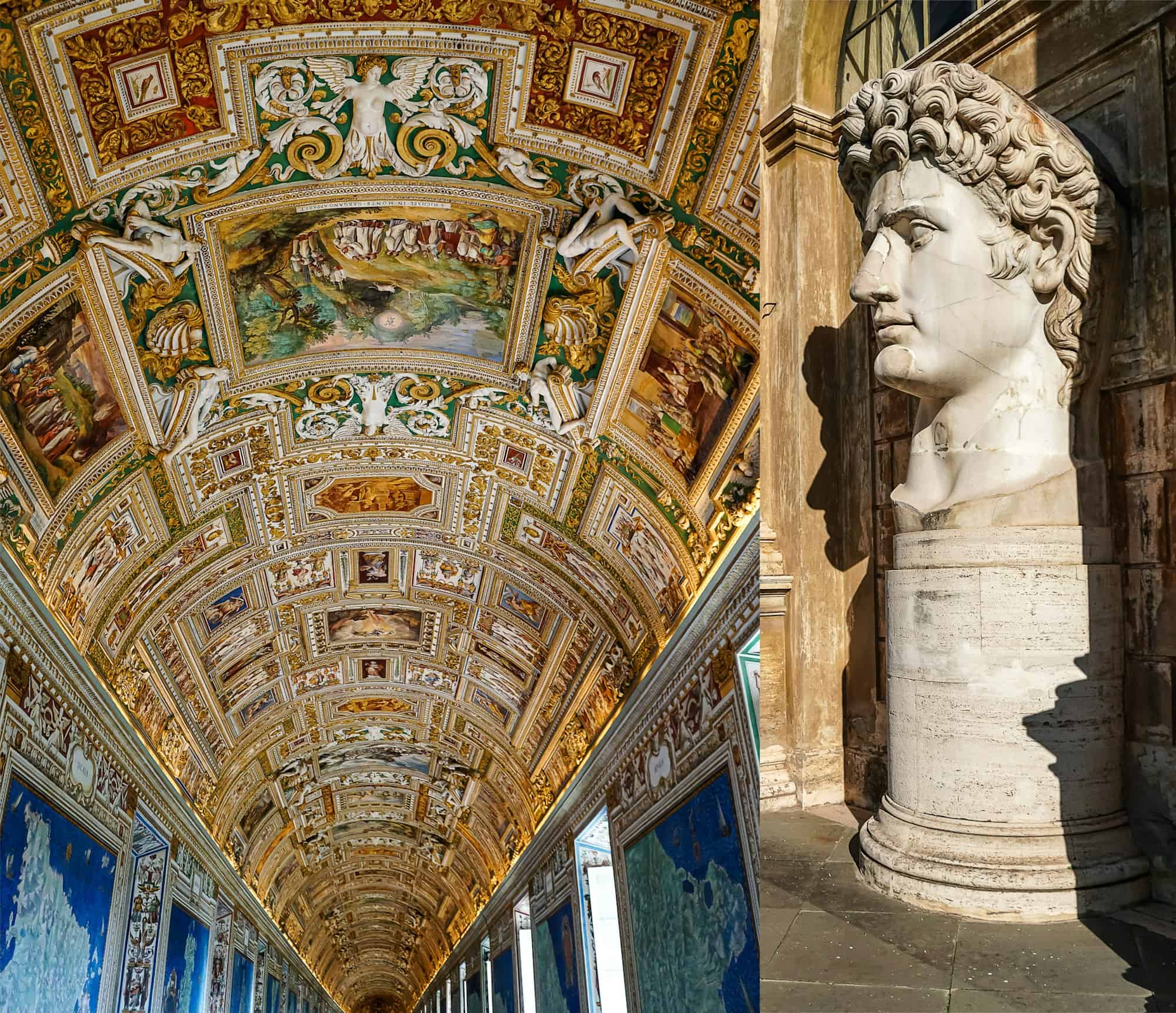
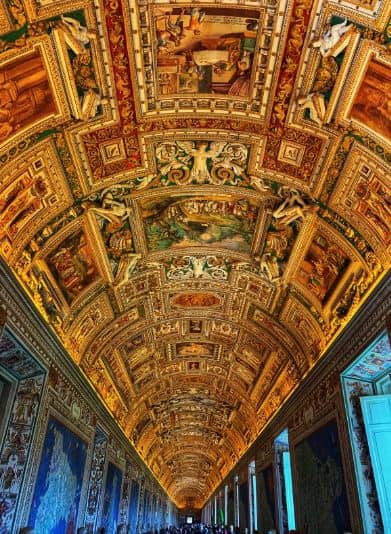
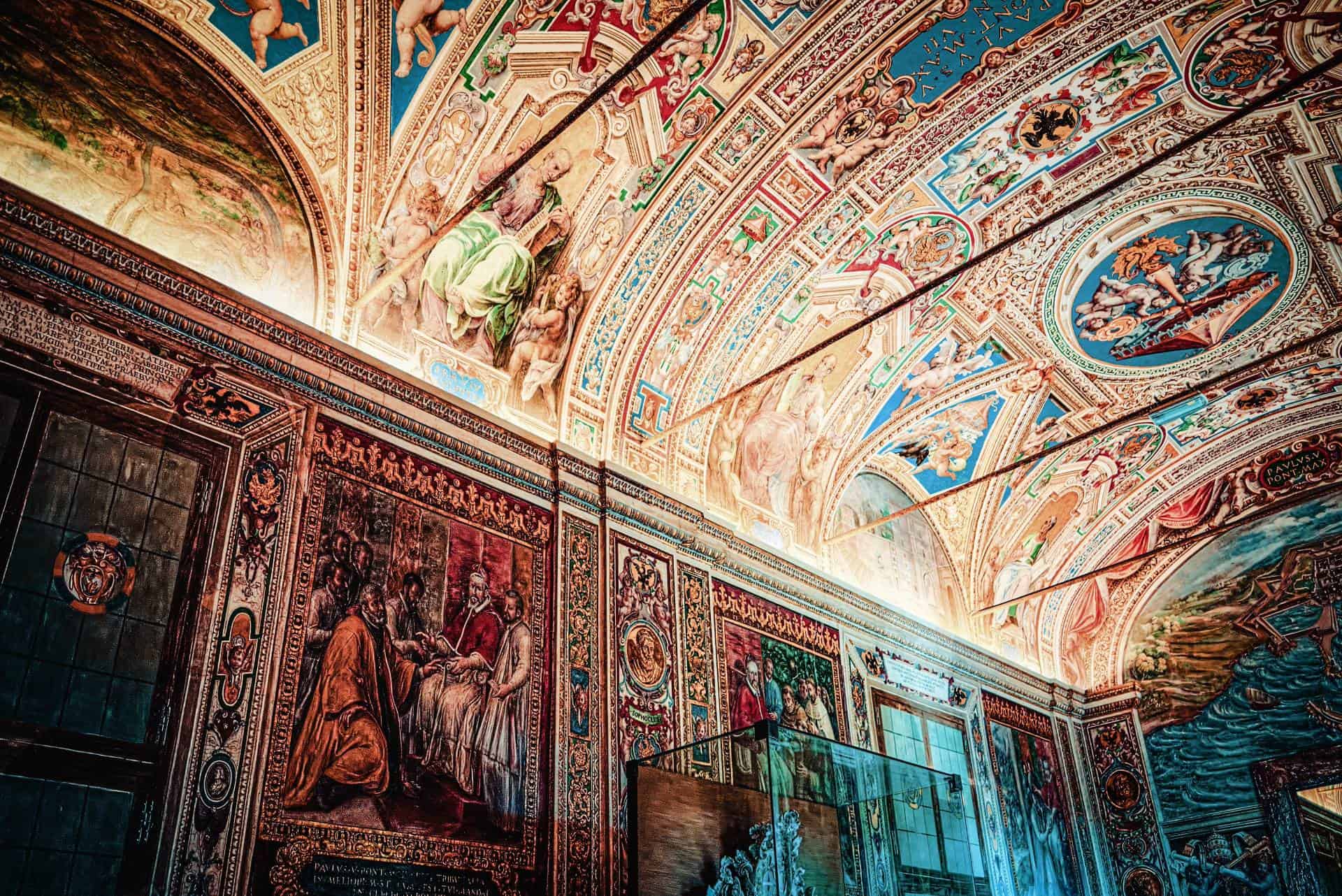
What makes these collections so compelling today is that traces of their original private life still remain visible. The Vatican Museums do not feel like neutral white-box galleries. They feel layered, ceremonial, and deeply connected to the environment that produced them. Frescoed ceilings, ornate corridors, papal insignia, and architectural transitions all remind visitors that these works were gathered in a world where collecting was intertwined with ritual and rule. The setting itself tells part of the story. One is not simply viewing art; one is entering the historical imagination of the papacy.
The private collections also explain the remarkable breadth of the Vatican Museums. A visitor might move from ancient marble to Christian iconography, from cartographic wonders to richly woven tapestry, from Renaissance frescoes to Egyptian and Etruscan antiquities. This diversity can seem almost surprising until one understands the collecting logic behind it. The papacy did not build a museum around a single category. It built a treasury of civilization. By assembling objects from different eras and cultures, the Vatican presented itself as a guardian of universal heritage, not just a patron of one period or style.
The role of Raphael e Michelangelo also becomes clearer within this context. Their masterpieces were not isolated commissions dropped into an otherwise random environment. They were part of a broader papal strategy to define the Vatican as the supreme stage of artistic achievement. The famous fresco cycles and monumental projects that visitors admire today were shaped by the same culture of collection that valued ancient statuary and rare objects. In the Vatican, patronage and collecting fed one another. The prestige of the papacy attracted artistic genius, and the presence of genius elevated the collections further.
Another key dimension of these pontifical treasures is devotion. For the popes, art was not only about beauty or historical curiosity. It was also about theology, memory, and the visible language of belief. Paintings, reliquaries, liturgical objects, and sacred spaces were collected and commissioned because they gave material form to spiritual ideas. Even works that now seem primarily aesthetic often had a devotional framework when they entered papal possession. This gives the Vatican Museums a different emotional tone from many secular institutions. Their history is inseparable from the sacred purpose that shaped much of their collecting.
The collections were also influenced by scholarship. Humanists, antiquarians, architects, and advisers helped identify, interpret, and elevate the importance of works entering the papal orbit. The Vatican did not preserve treasures by instinct alone. It preserved them through study. As a result, the museums embody a conversation between power and knowledge. A sculpture was not simply admired because it was beautiful; it was catalogued, contextualized, and tied to broader narratives about the ancient world and Christian civilization. This scholarly dimension helped transform private accumulation into something closer to cultural stewardship.
Perhaps the most fascinating aspect of Tesori Pontifici is that these private collections eventually became public without entirely losing their aura of exclusivity. Today millions of visitors pass through the Vatican Museums each year, yet the experience still carries the feeling of entering a space once reserved for a select few. That tension gives the museums much of their uniqueness. They are globally famous, yet still intimate with papal history. They are accessible, yet marked by centuries of selective taste. They are public, but their soul remains rooted in private collecting.
To understand the Vatican Museums fully, one must therefore look beyond the individual masterpieces and see the larger pattern that brought them together. The museums were not simply built by chance, nor by anonymous institutional planning. They were shaped by the desires, beliefs, and ambitions of successive popes who collected with purpose. Their private choices created one of the richest museum complexes on earth. That is the true meaning of Tesori Pontifici: not just hidden treasures of the papal world, but the private collections that slowly became a universal inheritance. In every gallery, courtyard, and chapel, the legacy of those choices is still visible, reminding us that the Vatican Museums are not only a place of art, but a monument to the act of collecting itself.

 English
  Polski
  Español
  Português
  Deutsch
  Français
  Italiano
  Português do Brasil
  Čeština
  Dansk
Dansk  Ελληνικά
  한국어
한국어  日本語
日本語  简体中文
简体中文  Русский
  Svenska
  Nederlands