Uofficiel hjemmeside

Raphael in Julius II Rooms

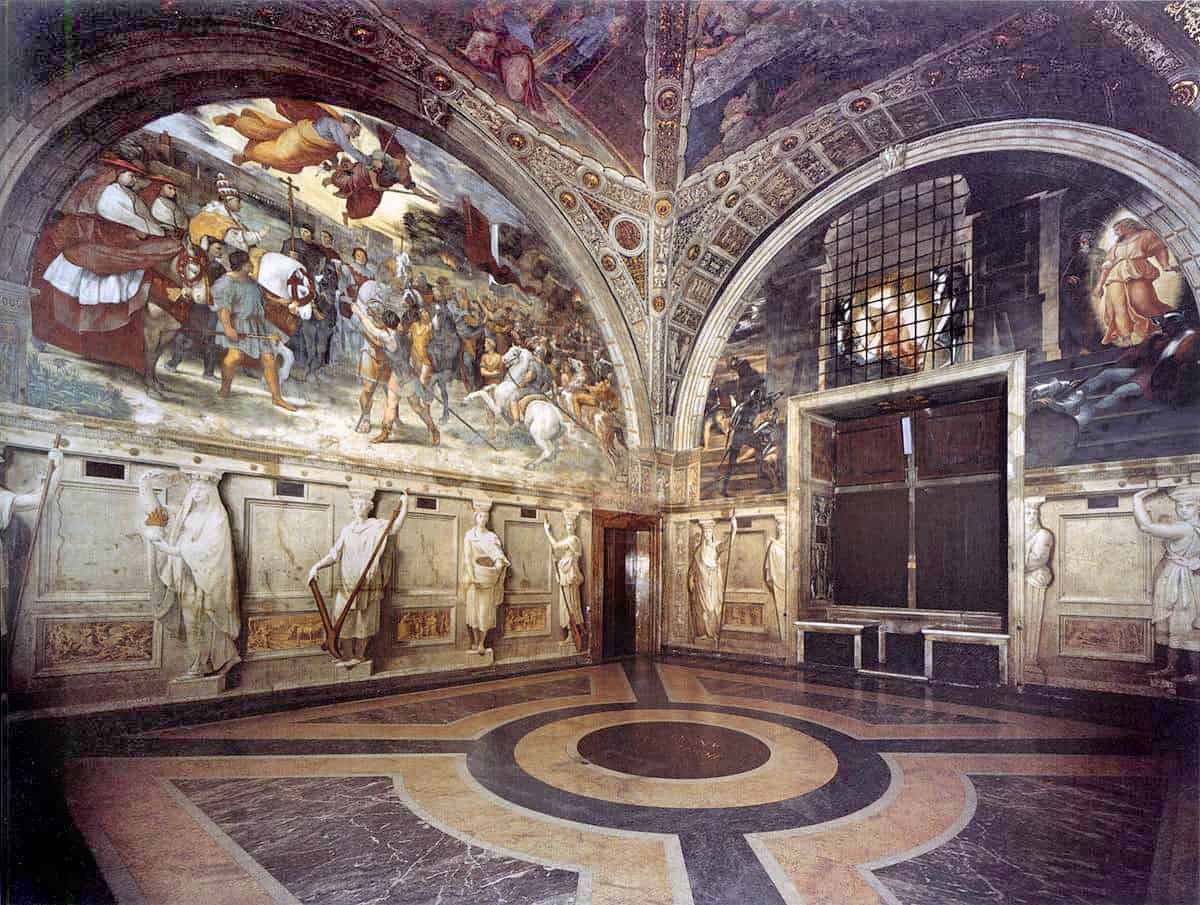
Den Papal lejligheder af Vatikanets museer, also known as the Raphael-værelser, are a complex of rooms decorated for the popes over the centuries. These spaces, famous for the frescoes by the Renaissance master Raphael, are among the Vatican’s most precious masterpieces. Each room is a stunning display of art and history, with scenes that celebrate religion, philosophy, and the culture of the time. Visiting them allows you to immerse yourself in the atmosphere of the Renaissance papal court, surrounded by artistic treasures of inestimable value.

Nyttige oplysninger

Åbningstider:

  • Monday – Saturday: 9:00 AM to 6:00 PM (last entry at 4:00 PM).
  • Sidste søndag i måneden: gratis adgang fra kl. 9.00 til 14.00 (sidste adgang kl. 12.30).
  • Lukkede dage: Søndage (undtagen den sidste søndag i måneden) og visse religiøse helligdage som jul og påske.

Billetter:

  • Det anbefales at købe billetter online på forhånd for at undgå lange køer.
  • Billetter kan bestilles med tidsbestemt adgang for at reducere ventetiden.
  • Der gives rabat til børn, studerende og grupper.
  • Audioguides og guidede ture er tilgængelige på forskellige sprog.

Sådan kommer du derhen

The Papal Apartments, known as the Raphael Rooms, are located within the Vatican Museums, specifically in the Vatican Apostolic Palace.

Historie

Den Papal lejligheder most visitors encounter inside the Vatican Museums are closely tied to the public apartments of Pave Julius II. In these rooms, the papacy used art as a language of authority—an environment where learning, faith, and power could be made visible through image, symbolism, and architectural illusion. That is why the experience feels different from a standard gallery: the rooms were designed to speak on behalf of the institution, not simply to display “beautiful things.”

The defining chapter here is the work of Raphael, commissioned by Julius II to cover the apartments with frescoes. The best-known scene, the School of Athens, centers on Plato og Aristotle in debate, surrounded by other great minds of antiquity. The sophistication lies in the way the fresco uses perspective, composition, and symbols to stage knowledge as something ordered and authoritative—exactly the kind of statement that mattered inside a papal setting.

These apartments also belong to a larger Renaissance moment shaped by artistic rivalry and ambition. Raphael was a contemporary of Michelangelo, and the Vatican visit places these peaks of Renaissance art within a single sequence: frescoed papal rooms leading onward toward the Det Sixtinske Kapel. Seen this way, the Papal Apartments are not just a highlight on the route. They are a hinge in the Vatican’s cultural narrative, where private power becomes public image through art that still holds attention, centuries later.

Den Papal lejligheder most visitors encounter inside the Vatican Museums are closely tied to the public apartments of Pave Julius II. In these rooms, the papacy used art as a language of authority—an environment where learning, faith, and power could be made visible through image, symbolism, and architectural illusion. That is why the experience feels different from a standard gallery: the rooms were designed to speak on behalf of the institution, not simply to display “beautiful things.”

The defining chapter here is the work of Raphael, commissioned by Julius II to cover the apartments with frescoes. The best-known scene, the School of Athens, centers on Plato og Aristotle in debate, surrounded by other great minds of antiquity. The sophistication lies in the way the fresco uses perspective, composition, and symbols to stage knowledge as something ordered and authoritative—exactly the kind of statement that mattered inside a papal setting.

These apartments also belong to a larger Renaissance moment shaped by artistic rivalry and ambition. Raphael was a contemporary of Michelangelo, and the Vatican visit places these peaks of Renaissance art within a single sequence: frescoed papal rooms leading onward toward the Det Sixtinske Kapel. Seen this way, the Papal Apartments are not just a highlight on the route. They are a hinge in the Vatican’s cultural narrative, where private power becomes public image through art that still holds attention, centuries later.

Vis mere

Anmeldelser

Tips

Vatikanmuseets bedste oplevelser

Rul til toppen