Inoffizielle Website

Vatican Classical Sculpture Rooms

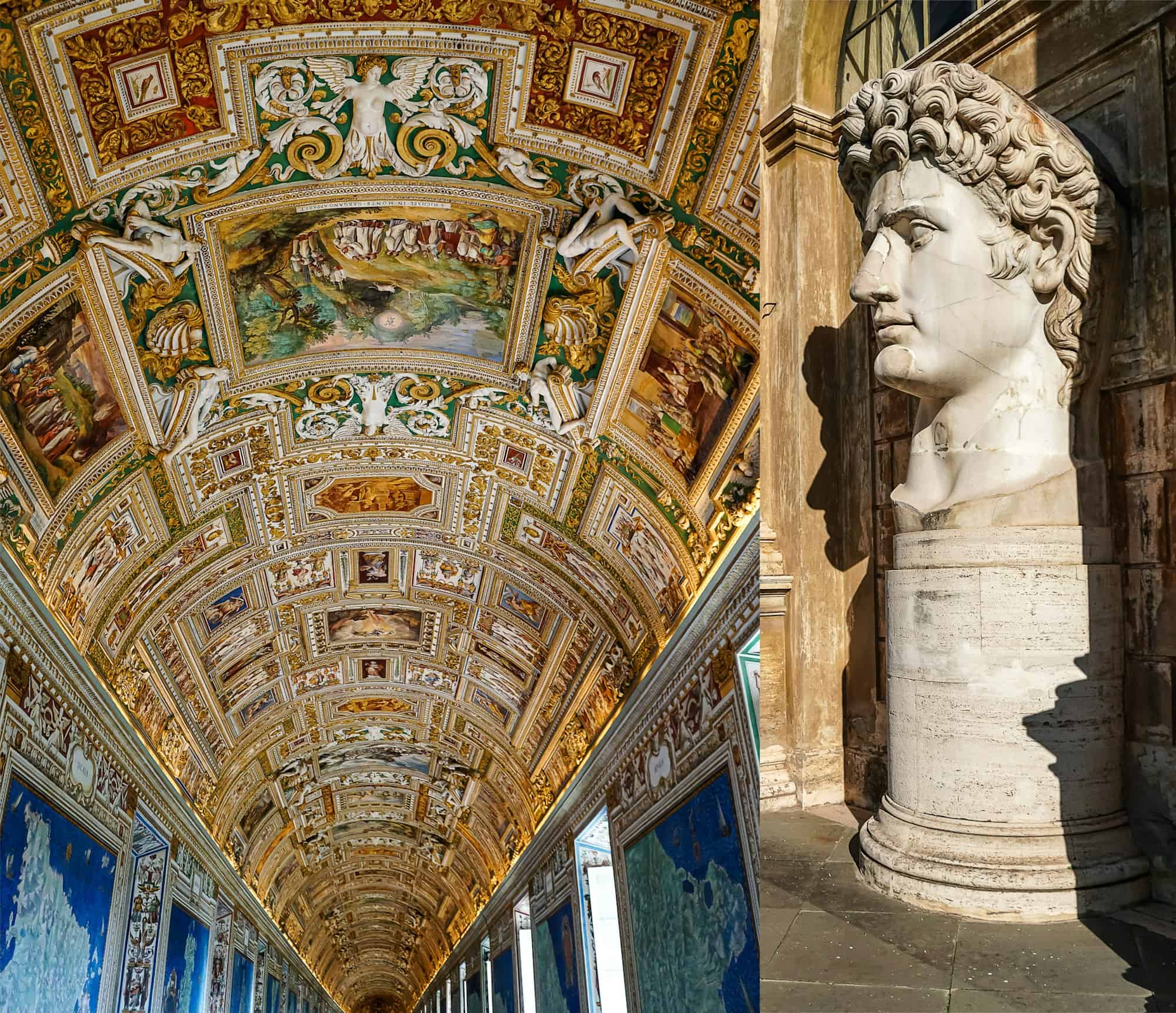
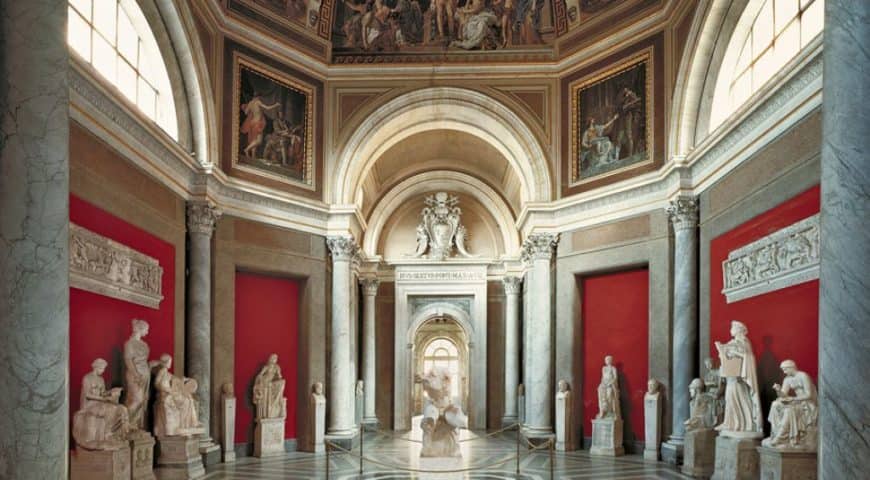
Die Pio-Clementinen-Museum im Vatikanische Museen is one of the most prestigious and important collections of classical sculpture in the world. Founded in the 18th century by Popes Clement XIV and Pius VI, the museum houses an extraordinary array of ancient Roman and Greek sculptures, many of which were discovered during excavations in Rome and surrounding areas. The museum was originally created to showcase the papal collection of antiquities and has since become one of the Vatican’s most visited sections.

The museum is renowned for its stunning galleries, which include some of the Vatican Museums’ most iconic spaces such as the Octagonal Courtyard, home to masterpieces like the Laocoön Group and the Apollo Belvedere. Other highlights include the Hall of the Muses, which features statues of the Nine Muses and the famous Belvedere Torso, and the Round Hall, modeled after the Pantheon, which contains large, impressive sculptures and a magnificent mosaic floor.

The Pio-Clementine Museum offers a comprehensive view of classical art and sculpture, displaying the skill and artistry of ancient craftsmen. It provides visitors with a deeper understanding of the artistic, cultural, and religious influences that shaped Roman and Greek civilizations, making it an essential stop for those interested in the legacy of classical antiquity.

Nützliche Informationen

Öffnungszeiten:

  • Montag - Samstag: 9:00 Uhr bis 18:00 Uhr (letzter Einlass um 16:00 Uhr).
  • Letzter Sonntag im Monat: freier Eintritt von 9:00 bis 14:00 Uhr (letzter Eintritt um 12:30 Uhr).
  • Geschlossene Tage: Sonntags (außer am letzten Sonntag des Monats) und an bestimmten religiösen Feiertagen wie Weihnachten und Ostern.

Eintrittskarten:

  • Es ist ratsam, die Tickets im Voraus online zu kaufen, um lange Warteschlangen zu vermeiden.
  • Um die Wartezeiten zu verkürzen, können Tickets mit zeitlich begrenztem Eintritt gebucht werden.
  • Für Kinder, Studenten und Gruppen gibt es Ermäßigungen.
  • Audioguides und Führungen sind in verschiedenen Sprachen erhältlich.

Wie man dorthin kommt

The Pio-Clementine Museum is located within the Vatican Museums complex, situated in the Vatican Palace. It is one of the first sections that visitors encounter after entering the museums, positioned along the main museum route. The museum’s galleries, including the Octagonal Courtyard and various other halls, are spread throughout a series of grand rooms within the Vatican’s extensive architectural structure. Its central location makes it easily accessible and a major attraction for visitors exploring the classical art and sculpture collections of the Vatican Museums.

Geschichte

Die Pio-Clementinen-Museum is one of the Vatican’s most important collections for understanding how ancient art was preserved, displayed, and celebrated in later centuries. The museum takes its name from two popes—Clemens XIV. und Pius VI.—whose era of collecting and institutional organization helped shape the Vatican’s identity as a major public museum complex. While the statues are ancient, the idea of presenting them in a coherent, monumental sequence is tied to this later history: turning classical sculpture into a curated narrative about civilization, beauty, and authority.

In these rooms, ancient works aren’t treated as isolated archaeological objects. They are staged as cultural anchors. Portraits, gods, athletes, and mythic scenes build a visual language that later Europe used to define education, taste, and power. The Vatican’s classical sculpture galleries became a reference point for artists, scholars, and travelers who came to Rome to study form and proportion, and to learn how the ancient world represented the human body as both ideal and expressive.

What makes the Pio-Clementine Museum historically significant for visitors today is that it still communicates this “school of looking.” You’re not only seeing famous pieces; you’re stepping into the tradition of Rome as a city where antiquity is continuously re-read. The experience is as much about how the Vatican built a museum culture around classical art as it is about the original ancient creators. In that sense, the museum is a bridge: ancient marble on one side, centuries of collecting and interpretation on the other, with the modern visitor walking between them.

Die Pio-Clementinen-Museum is one of the Vatican’s most important collections for understanding how ancient art was preserved, displayed, and celebrated in later centuries. The museum takes its name from two popes—Clemens XIV. und Pius VI.—whose era of collecting and institutional organization helped shape the Vatican’s identity as a major public museum complex. While the statues are ancient, the idea of presenting them in a coherent, monumental sequence is tied to this later history: turning classical sculpture into a curated narrative about civilization, beauty, and authority.

In these rooms, ancient works aren’t treated as isolated archaeological objects. They are staged as cultural anchors. Portraits, gods, athletes, and mythic scenes build a visual language that later Europe used to define education, taste, and power. The Vatican’s classical sculpture galleries became a reference point for artists, scholars, and travelers who came to Rome to study form and proportion, and to learn how the ancient world represented the human body as both ideal and expressive.

What makes the Pio-Clementine Museum historically significant for visitors today is that it still communicates this “school of looking.” You’re not only seeing famous pieces; you’re stepping into the tradition of Rome as a city where antiquity is continuously re-read. The experience is as much about how the Vatican built a museum culture around classical art as it is about the original ancient creators. In that sense, the museum is a bridge: ancient marble on one side, centuries of collecting and interpretation on the other, with the modern visitor walking between them.

Mehr anzeigen

Bewertungen

Tipps

Die besten Erlebnisse der Vatikanischen Museen

Nach oben scrollen