Ανεπίσημη ιστοσελίδα

Borgia Apartments frescoed papal rooms

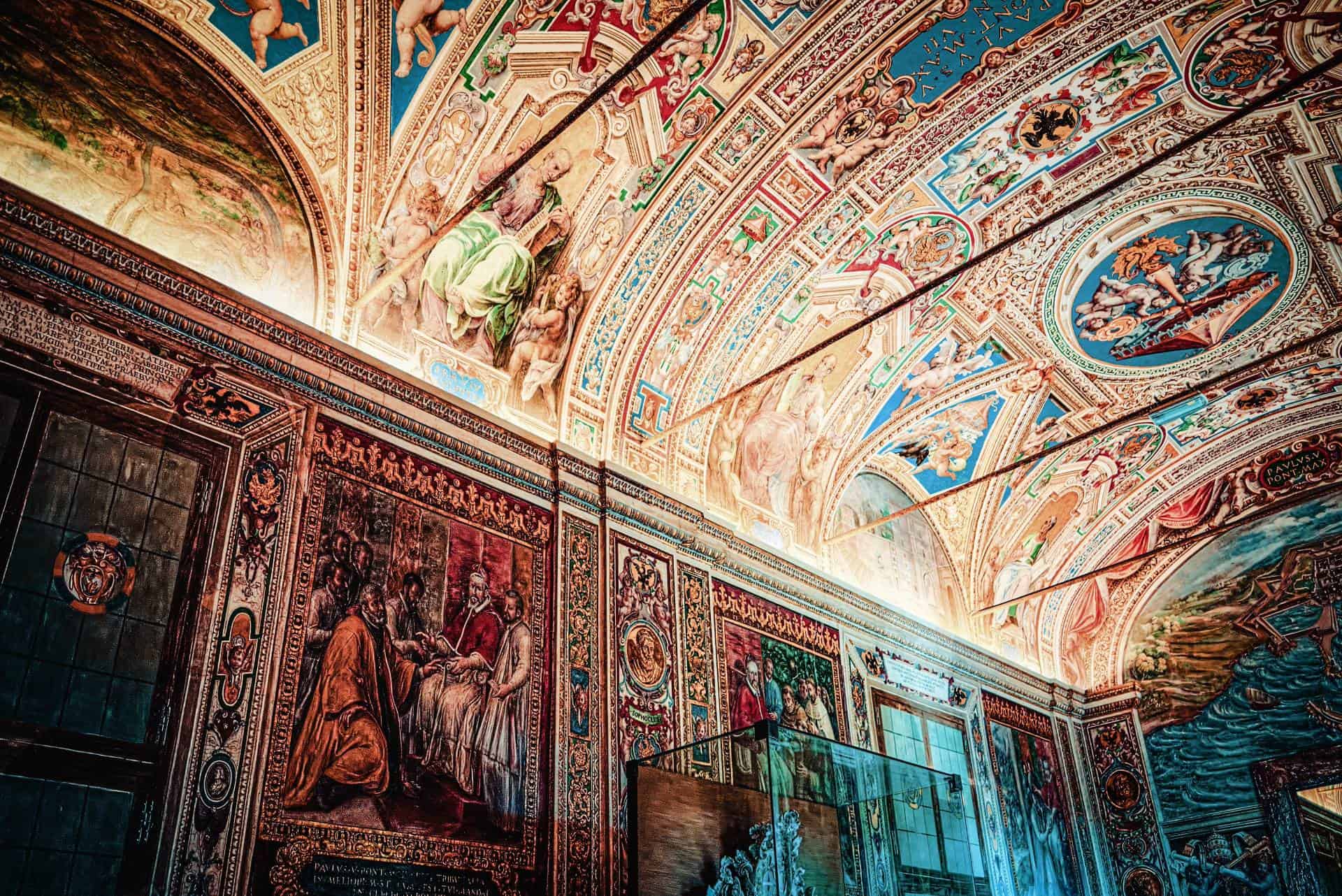
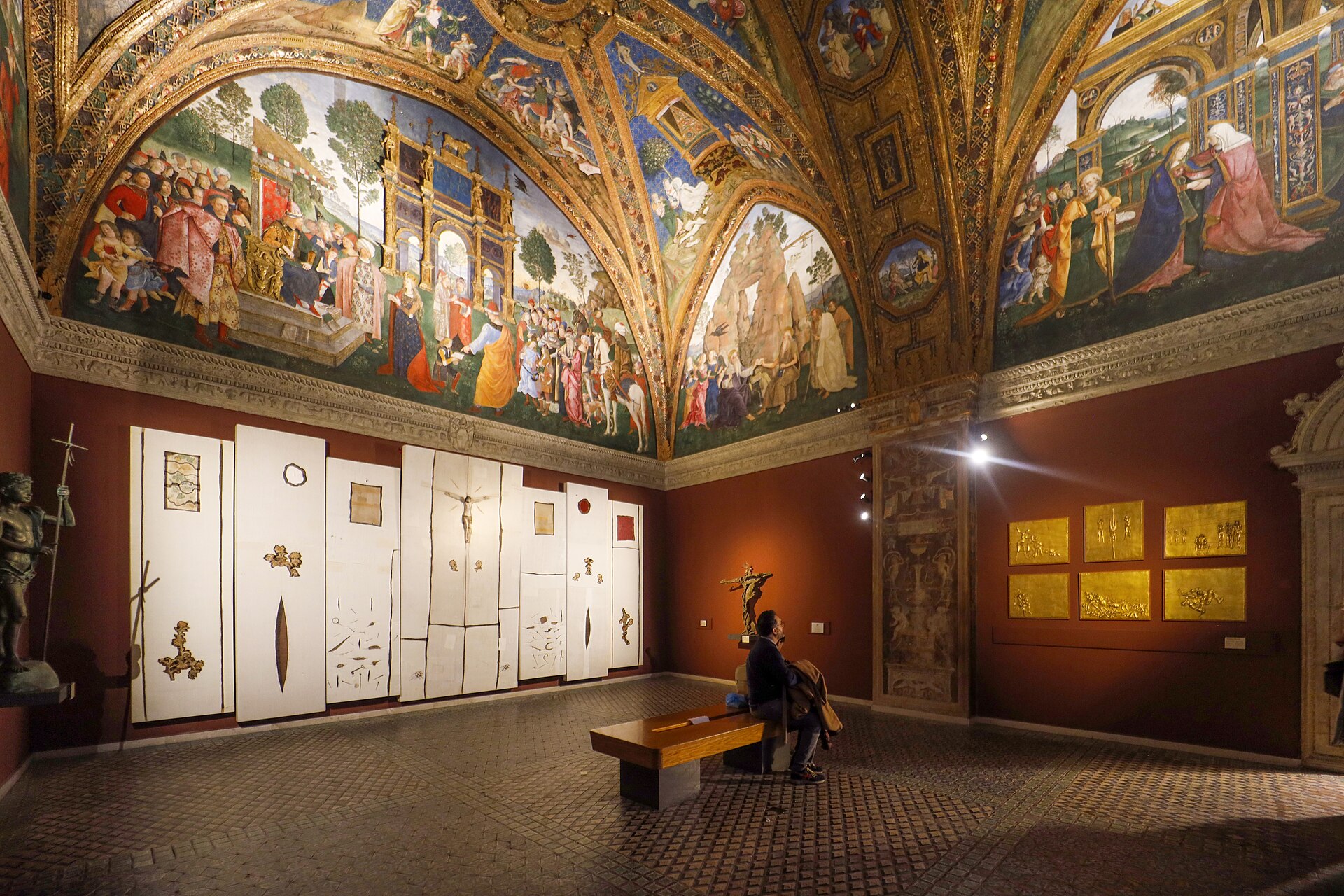
Το Διαμερίσματα Borgia στο Μουσεία Βατικανού are a series of rooms commissioned by Pope Alexander VI, a member of the notorious Borgia family, in the late 15th century. These lavishly decorated chambers were originally used as private papal apartments and are renowned for their stunning frescoes painted by the Italian artist Pinturicchio and his workshop. The frescoes depict religious, mythological, and allegorical themes, blending Christian symbolism with Renaissance artistic techniques.

The rooms include the Hall of the Mysteries of Faith, the Hall of the Sibyls, and the Hall of the Saints, each with intricate ceiling frescoes and wall paintings that illustrate sacred stories and figures. Today, the Borgia Apartments are part of the Vatican Museums tour and house part of the Collection of Modern Religious Art, providing visitors with a fascinating mix of Renaissance art and modern spiritual works in a historic setting. The apartments reflect the grandeur and cultural richness of the Renaissance papal court while offering a glimpse into the artistic legacy of one of history’s most infamous papal families.

Χρήσιμες πληροφορίες

Ώρες λειτουργίας:

  • Δευτέρα - Σάββατο: (τελευταία είσοδος στις 4:00 μ.μ.).
  • Τελευταία Κυριακή του μήνα: ελεύθερη είσοδος από τις 9:00 π.μ. έως τις 2:00 μ.μ. (τελευταία είσοδος στις 12:30 μ.μ.).
  • Κλειστές ημέρες: Κυριακές (εκτός από την τελευταία Κυριακή του μήνα) και ορισμένες θρησκευτικές αργίες όπως τα Χριστούγεννα και το Πάσχα.

Εισιτήρια:

  • Συνιστάται να αγοράζετε τα εισιτήρια ηλεκτρονικά εκ των προτέρων για να αποφύγετε τις μεγάλες ουρές.
  • Μπορείτε να κλείσετε εισιτήρια με χρονομετρημένη είσοδο για να μειώσετε τους χρόνους αναμονής.
  • Διατίθενται εκπτώσεις για παιδιά, φοιτητές και ομάδες.
  • Διατίθενται ακουστικοί οδηγοί και ξεναγήσεις σε διάφορες γλώσσες.

Πώς να πάτε εκεί

The Borgia Apartments are located within the Vatican Museums, situated in the Apostolic Palace.

Ιστορία

Το Διαμερίσματα Borgia are named for Rodrigo de Borja—Pope Alexander VI—who used this part of the papal residence during his pontificate (1492–1503). The Vatican Museums describe the Apartments as six monumental spaces renovated and decorated at Alexander VI’s request, and they identify the six rooms by name: the Room of the Sibyls, the Room of the Creed, the Room of the Liberal Arts, the Room of the Saints, the Room of the Mysteries, and the Room of the Pontiffs.

After Alexander VI’s death, the Apartments were abandoned by Julius II, who moved to the rooms above—now known as the Δωμάτια Ραφαήλ. Over the centuries the spaces were reused for different functions, and only at the end of the 1800s were they opened to the public after restoration, according to the Vatican Museums’ account.

The Vatican Museums also explain that the pictorial decoration of the “secret rooms” was entrusted to the Umbrian painter Pinturicchio (Bernardino di Betto) and that the work was completed rapidly between the autumn of 1492 and the beginning of 1494 with support from a team of artists. Today, the Vatican Museums note that these rooms house part of the Vatican Museums’ Collection of Modern and Contemporary Art, inaugurated by Paul VI in 1973—an unusual and fascinating layering of Renaissance fresco environment with later collecting history.

Το Διαμερίσματα Borgia are named for Rodrigo de Borja—Pope Alexander VI—who used this part of the papal residence during his pontificate (1492–1503). The Vatican Museums describe the Apartments as six monumental spaces renovated and decorated at Alexander VI’s request, and they identify the six rooms by name: the Room of the Sibyls, the Room of the Creed, the Room of the Liberal Arts, the Room of the Saints, the Room of the Mysteries, and the Room of the Pontiffs.

After Alexander VI’s death, the Apartments were abandoned by Julius II, who moved to the rooms above—now known as the Δωμάτια Ραφαήλ. Over the centuries the spaces were reused for different functions, and only at the end of the 1800s were they opened to the public after restoration, according to the Vatican Museums’ account.

The Vatican Museums also explain that the pictorial decoration of the “secret rooms” was entrusted to the Umbrian painter Pinturicchio (Bernardino di Betto) and that the work was completed rapidly between the autumn of 1492 and the beginning of 1494 with support from a team of artists. Today, the Vatican Museums note that these rooms house part of the Vatican Museums’ Collection of Modern and Contemporary Art, inaugurated by Paul VI in 1973—an unusual and fascinating layering of Renaissance fresco environment with later collecting history.

Εμφάνιση περισσότερων

Κριτικές

Συμβουλές

Κορυφαίες εμπειρίες των Μουσείων του Βατικανού

Μετακινηθείτε στην κορυφή