Sito web non ufficiale

Octagonal Courtyard sculpture highlights

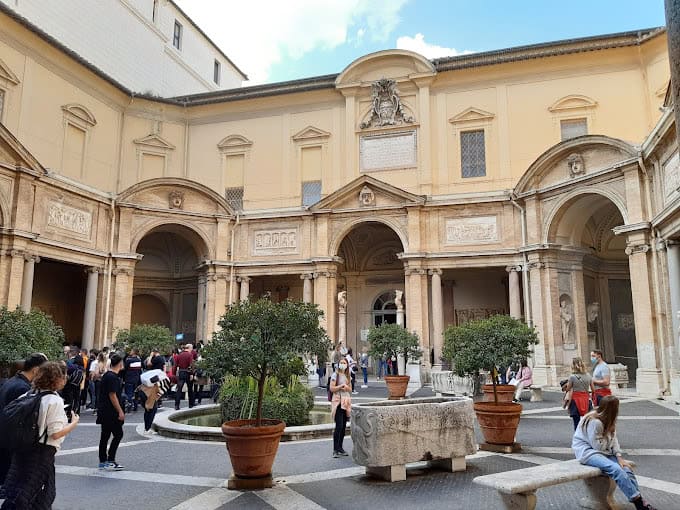
Il Cortile ottagonale, located in the Musei Vaticani, is one of the most iconic spaces in the complex. Originally designed by the Renaissance architect Donato Bramante in the early 16th century, this courtyard is a stunning open-air gallery that houses some of the Vatican’s most important classical sculptures. The layout of the courtyard, with its eight sides, provides an elegant backdrop to masterpieces such as the Laocoön Group and the Apollo Belvedere. These ancient statues are displayed in niches that allow visitors to admire their beauty and historical significance from all angles. The Octagonal Courtyard is not only a place of artistic importance but also offers a peaceful atmosphere, perfect for reflecting on the masterpieces of antiquity that have shaped Western art.

Informazioni utili

Orari di apertura:

  • Da lunedì a sabato: Dalle 9:00 alle 18:00 (ultimo ingresso alle 16:00).
  • Ultima domenica del mese: ingresso libero dalle 9:00 alle 14:00 (ultimo ingresso alle 12:30).
  • Giorni di chiusura: Domenica (tranne l'ultima domenica del mese) e alcune festività religiose come Natale e Pasqua.

Biglietti:

  • È consigliabile acquistare i biglietti online in anticipo per evitare lunghe file.
  • I biglietti possono essere prenotati con ingresso a tempo per ridurre i tempi di attesa.
  • Sono previsti sconti per bambini, studenti e gruppi.
  • Audioguide e visite guidate sono disponibili in varie lingue.

Come arrivare

The Octagonal Courtyard (Cortile Ottagono) is located within the Vatican Museums complex, specifically in the Belvedere Courtyard, part of the section known as the Pio-Clementine Museum. This courtyard is accessible along the museum route and is one of the first stops during the visit, right after passing through some of the main galleries and halls. The Octagonal Courtyard houses some of the most famous classical statues in the Vatican collection and is one of the key attractions during the museum tour.

La storia

Il Octagonal Court (Cortile Ottagono) was once known as the Cortile delle Statue, and it housed the first nucleus of antique classical statues in the pontifical collections. The Vatican Museums explain that Papa Giulio II (1503–1513) displayed an extraordinary collection of antique sculpture here, with the ambition of reviving the “Rome of the Caesars” within the Rome of the Popes.

In the late 1700s, the Vatican notes that Clement XIV e Pius VI transformed the growing collection into a purpose-built museum, and the court became the fulcrum of that new project. This period is also when the Pio Clementino Museum takes its name, honoring the two popes who oversaw its foundation.

Despite later changes over the centuries, the Vatican Museums state that some sculptures—specifically including the Laocoön e il Apollo Belvedere—remain in positions they have held since the early 16th century. For today’s visitor, that continuity is part of the magic: you’re not just seeing famous works, you’re standing in a historical display environment that helped shape how Renaissance and later artists learned to look at antiquity.

Il Octagonal Court (Cortile Ottagono) was once known as the Cortile delle Statue, and it housed the first nucleus of antique classical statues in the pontifical collections. The Vatican Museums explain that Papa Giulio II (1503–1513) displayed an extraordinary collection of antique sculpture here, with the ambition of reviving the “Rome of the Caesars” within the Rome of the Popes.

In the late 1700s, the Vatican notes that Clement XIV e Pius VI transformed the growing collection into a purpose-built museum, and the court became the fulcrum of that new project. This period is also when the Pio Clementino Museum takes its name, honoring the two popes who oversaw its foundation.

Despite later changes over the centuries, the Vatican Museums state that some sculptures—specifically including the Laocoön e il Apollo Belvedere—remain in positions they have held since the early 16th century. For today’s visitor, that continuity is part of the magic: you’re not just seeing famous works, you’re standing in a historical display environment that helped shape how Renaissance and later artists learned to look at antiquity.

Mostra di più

Recensioni

Suggerimenti

Le migliori esperienze dei Musei Vaticani

Torna in alto