Inofficiell webbplats

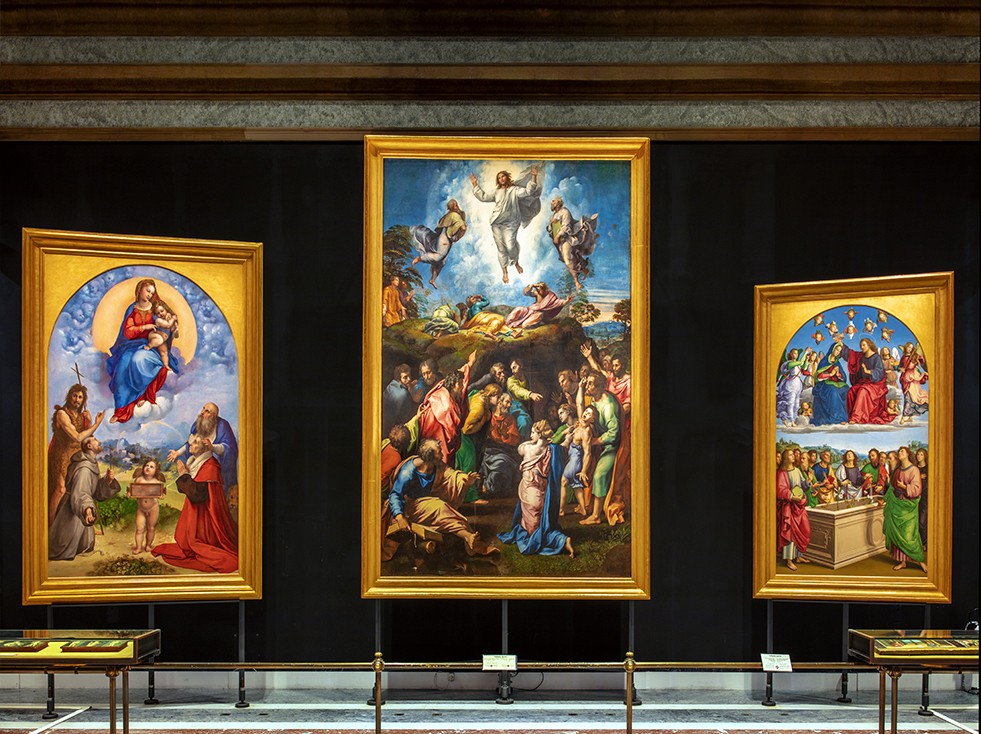
Den Pinacoteca Vaticana is the Vatican Museums’ art gallery, housing one of the most impressive collections of Renaissance and Baroque paintings in the world. Established in 1932, the Pinacoteca features 18 rooms filled with masterpieces from the 12th to the 19th centuries, showcasing the works of legendary artists such as Raphael, Leonardo da Vinci, Caravaggio, Titian, and Giotto.

The gallery’s collection includes over 400 works of art, ranging from religious icons and altarpieces to frescoes and portraits. Highlights of the Pinacoteca include Raphael’s Transfiguration, Leonardo da Vinci’s St. Jerome in the Wilderness, and Caravaggio’s Deposition from the Cross. Each room is organized chronologically, allowing visitors to trace the development of art through the centuries.

Designed with natural light to enhance the viewing experience, the Pinacoteca offers a serene and contemplative atmosphere, making it a must-see for art lovers and those interested in the evolution of Christian art. The gallery provides a deep dive into the spiritual and artistic history of the Vatican, offering insight into the cultural and religious significance of its impressive collection.

Useful information

Opening hours:

  • Monday – Saturday: 9:00 AM to 6:00 PM (last entry at 4:00 PM).
  • Last Sunday of the month: free entry from 9:00 AM to 2:00 PM (last entry at 12:30 PM).
  • Closed days: Sundays (except the last Sunday of the month) and certain religious holidays such as Christmas and Easter.

Tickets:

  • It is advisable to purchase tickets online in advance to avoid long lines.
  • Tickets can be booked with timed entry to reduce waiting times.
  • Discounts are available for children, students, and groups.
  • Audioguides and guided tours are available in various languages.

How to get there

The Pinacoteca Vaticana is located within the Vatican Museums complex, near the main entrance. It is situated in a dedicated building within the Vatican Gardens, designed specifically to house and display its extensive collection of paintings.

History

Den Pinacoteca Vaticana represents the Vatican’s commitment to preserving and presenting painting as a coherent historical story, not just as isolated masterpieces. Over time, papal collecting and the safeguarding of artworks helped form a collection that spans centuries, giving visitors a structured way to see how Italian painting evolved in technique, subject, and emotional language.

What makes the Pinacoteca’s story especially Roman is the way it links art to institutions: patronage, the Church, and the cultural authority that shaped what artists were commissioned to create. Many works associated with the Vatican’s collections were originally made for religious settings, altars, chapels, and devotional contexts, then later gathered into museum spaces so they could be preserved and studied. That shift from functional setting to museum display is part of what you experience when you visit: the paintings still carry the gravity of their original purpose, but you can now view them up close, compare them, and trace influences across time.

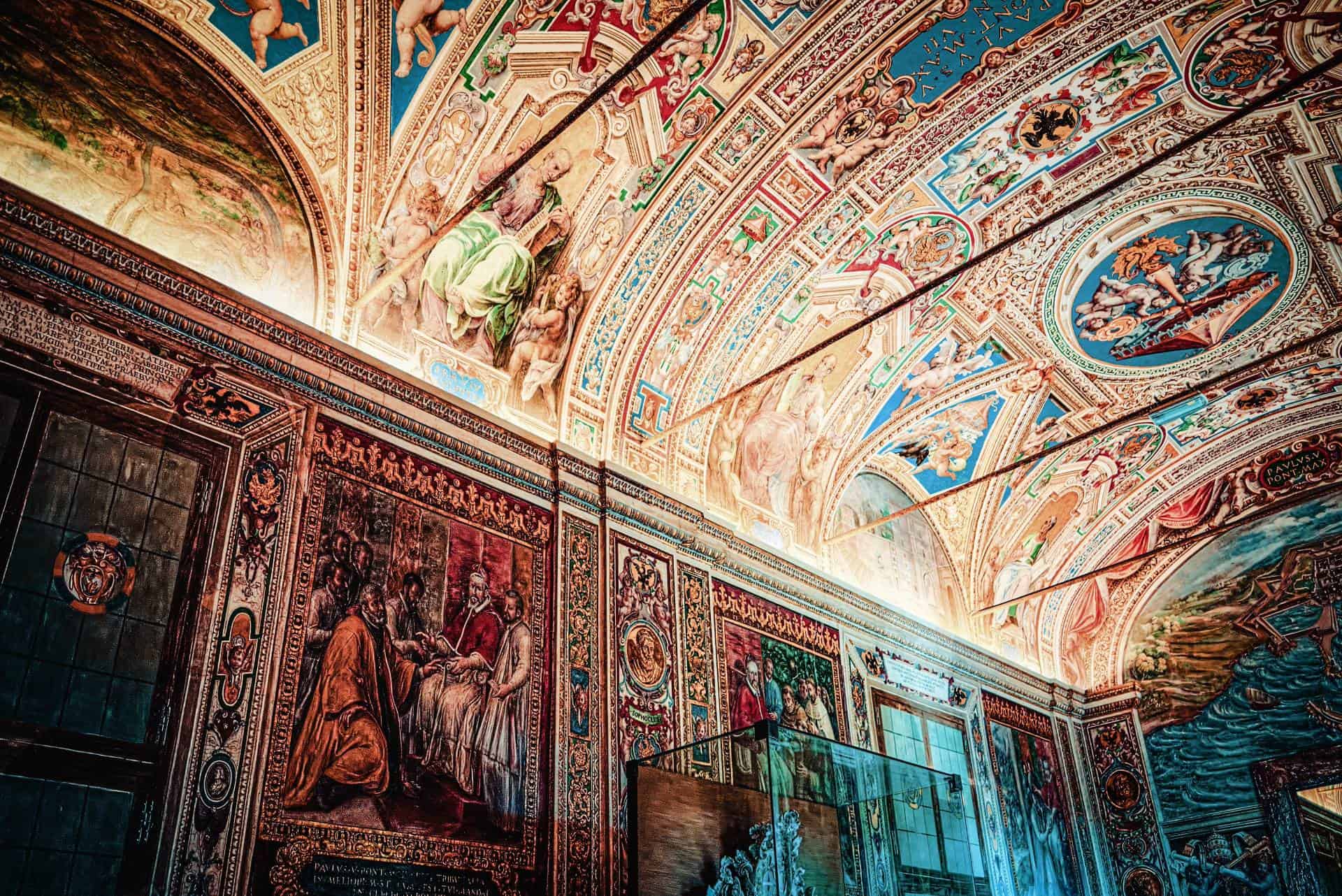
As a visitor today, the Pinacoteca becomes a counterbalance to the Vatican’s most famous spectacles. While frescoed rooms and monumental corridors impress through scale, the Pinacoteca impresses through attention: brushwork, composition, and the steady unfolding of style. It reminds you that the Vatican’s collections are not only about single “finale” moments, but also about the longer history of how images shaped belief, memory, and power across generations.

Den Pinacoteca Vaticana represents the Vatican’s commitment to preserving and presenting painting as a coherent historical story, not just as isolated masterpieces. Over time, papal collecting and the safeguarding of artworks helped form a collection that spans centuries, giving visitors a structured way to see how Italian painting evolved in technique, subject, and emotional language.

What makes the Pinacoteca’s story especially Roman is the way it links art to institutions: patronage, the Church, and the cultural authority that shaped what artists were commissioned to create. Many works associated with the Vatican’s collections were originally made for religious settings, altars, chapels, and devotional contexts, then later gathered into museum spaces so they could be preserved and studied. That shift from functional setting to museum display is part of what you experience when you visit: the paintings still carry the gravity of their original purpose, but you can now view them up close, compare them, and trace influences across time.

As a visitor today, the Pinacoteca becomes a counterbalance to the Vatican’s most famous spectacles. While frescoed rooms and monumental corridors impress through scale, the Pinacoteca impresses through attention: brushwork, composition, and the steady unfolding of style. It reminds you that the Vatican’s collections are not only about single “finale” moments, but also about the longer history of how images shaped belief, memory, and power across generations.

Visa mer

Reviews

Tips

Vatican Museums's Top Experiences

Rulla till toppen