Uofficiel hjemmeside

Vatican Modern Religious Art

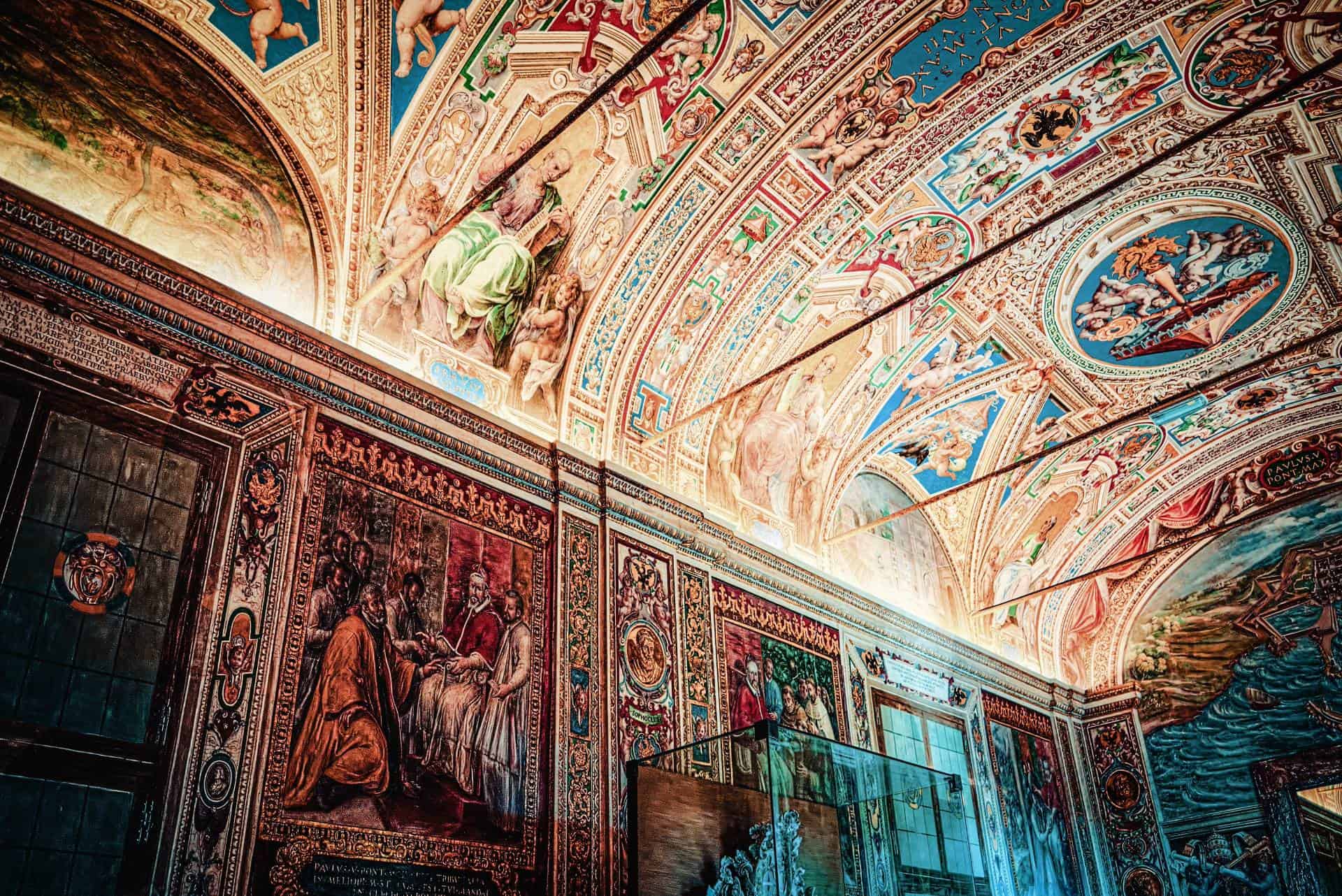
Den Samling af moderne religiøs kunst in the Vatikanets museer is a fascinating and unique gallery dedicated to the works of contemporary artists who explore themes of spirituality and religion. Established in 1973 under Pope Paul VI, the collection features over 800 pieces, including paintings, sculptures, and graphic art by renowned 20th-century artists such as Van Gogh, Gauguin, Dalí, Chagall, and Francis Bacon. The gallery bridges the gap between traditional religious art and modern artistic expression, offering a fresh perspective on faith and devotion in a contemporary context. The collection showcases how modern artists have interpreted religious themes, making it a captivating stop for visitors interested in both modern art and religious history.

Nyttige oplysninger

Åbningstider:

  • Mandag - lørdag: 9:00 til 18:00 (sidste adgang kl. 16:00).
  • Sidste søndag i måneden: gratis adgang fra kl. 9.00 til 14.00 (sidste adgang kl. 12.30).
  • Lukkede dage: Søndage (undtagen den sidste søndag i måneden) og visse religiøse helligdage som jul og påske.

Billetter:

  • Det anbefales at købe billetter online på forhånd for at undgå lange køer.
  • Billetter kan bestilles med tidsbestemt adgang for at reducere ventetiden.
  • Der gives rabat til børn, studerende og grupper.
  • Audioguides og guidede ture er tilgængelige på forskellige sprog.

Sådan kommer du derhen

The Collection of Modern Religious Art is located within the Vatican Museums, specifically housed in a series of rooms near the Sistine Chapel.

Historie

The Collection of Modern Religious Art in the Vatican Museums is rooted in a specific decision: to rebuild a relationship between the Church and contemporary artistic culture. The Vatican Museums describe the Collection of Modern and Contemporary Art as emerging from Paul VI’s desire to reinstate this dialogue, and they place its public inauguration on 23 June 1973.

The same Vatican account explains that the collection was built through donations, paintings, sculpture, and graphic arts, by artists, collectors, and institutions, with many contacts linked to Paul VI’s address to the art world during an encounter in the Det Sixtinske Kapel on 7 May 1964. In that address, the pontiff highlighted the distance that had opened between the Church and contemporary art and expressed the hope of bringing them closer again, with the outcome being the constitution of a collection focused on contemporary religious art.

Over roughly a decade, this initiative expanded a smaller nucleus of nineteenth-century works and grew into a large body of modern material. Today, the Vatican states, the collection numbers around 8,000 works, while the selection displayed to the public offers a broad overview of twentieth-century Italian and international art, including major figures such as Van Gogh, Bacon, Chagall, de Chirico, Fontana, Burri, and Matisse.

This history explains why the experience feels so different inside the Vatican: it is not simply a “modern wing,” but an intentional statement about continuity—how sacred themes can persist even as artistic languages change. It is also why the collection’s placement along the Vatican itinerary matters: it becomes a bridge between Renaissance tradition and the Vatican’s most iconic spaces, offering visitors a fuller, more layered view of how art and belief have continued to speak to each other across time.

The Collection of Modern Religious Art in the Vatican Museums is rooted in a specific decision: to rebuild a relationship between the Church and contemporary artistic culture. The Vatican Museums describe the Collection of Modern and Contemporary Art as emerging from Paul VI’s desire to reinstate this dialogue, and they place its public inauguration on 23 June 1973.

The same Vatican account explains that the collection was built through donations, paintings, sculpture, and graphic arts, by artists, collectors, and institutions, with many contacts linked to Paul VI’s address to the art world during an encounter in the Det Sixtinske Kapel on 7 May 1964. In that address, the pontiff highlighted the distance that had opened between the Church and contemporary art and expressed the hope of bringing them closer again, with the outcome being the constitution of a collection focused on contemporary religious art.

Over roughly a decade, this initiative expanded a smaller nucleus of nineteenth-century works and grew into a large body of modern material. Today, the Vatican states, the collection numbers around 8,000 works, while the selection displayed to the public offers a broad overview of twentieth-century Italian and international art, including major figures such as Van Gogh, Bacon, Chagall, de Chirico, Fontana, Burri, and Matisse.

This history explains why the experience feels so different inside the Vatican: it is not simply a “modern wing,” but an intentional statement about continuity—how sacred themes can persist even as artistic languages change. It is also why the collection’s placement along the Vatican itinerary matters: it becomes a bridge between Renaissance tradition and the Vatican’s most iconic spaces, offering visitors a fuller, more layered view of how art and belief have continued to speak to each other across time.

Vis mere

Anmeldelser

Tips

Vatikanmuseets bedste oplevelser

Rul til toppen