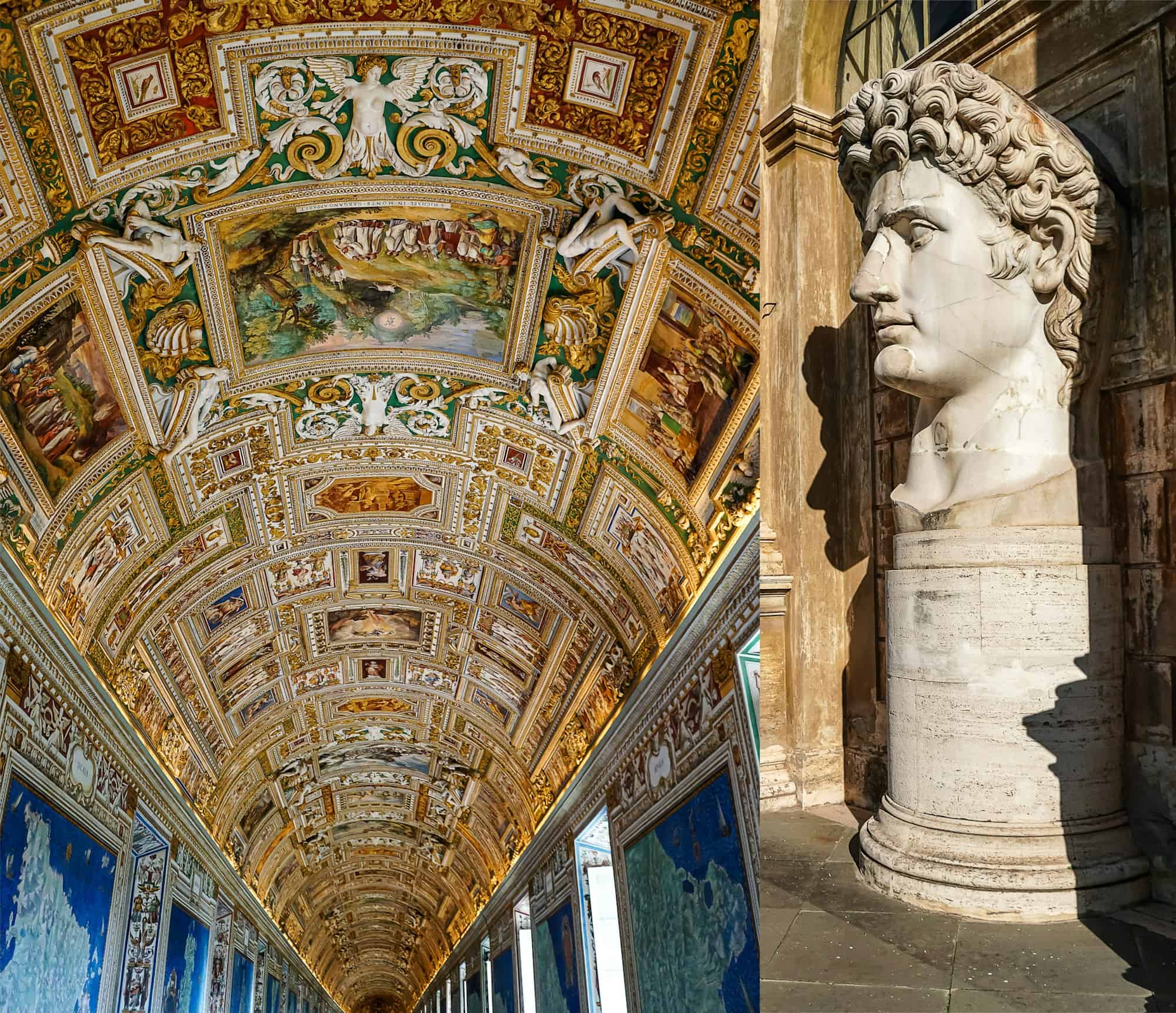
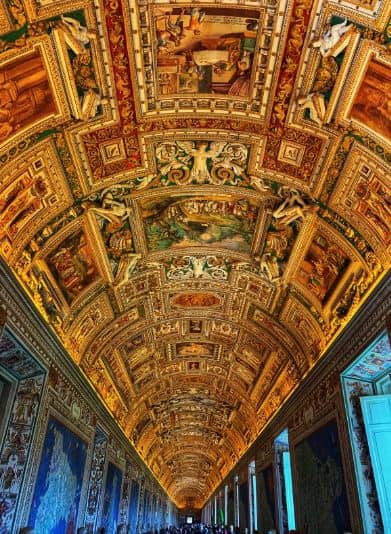
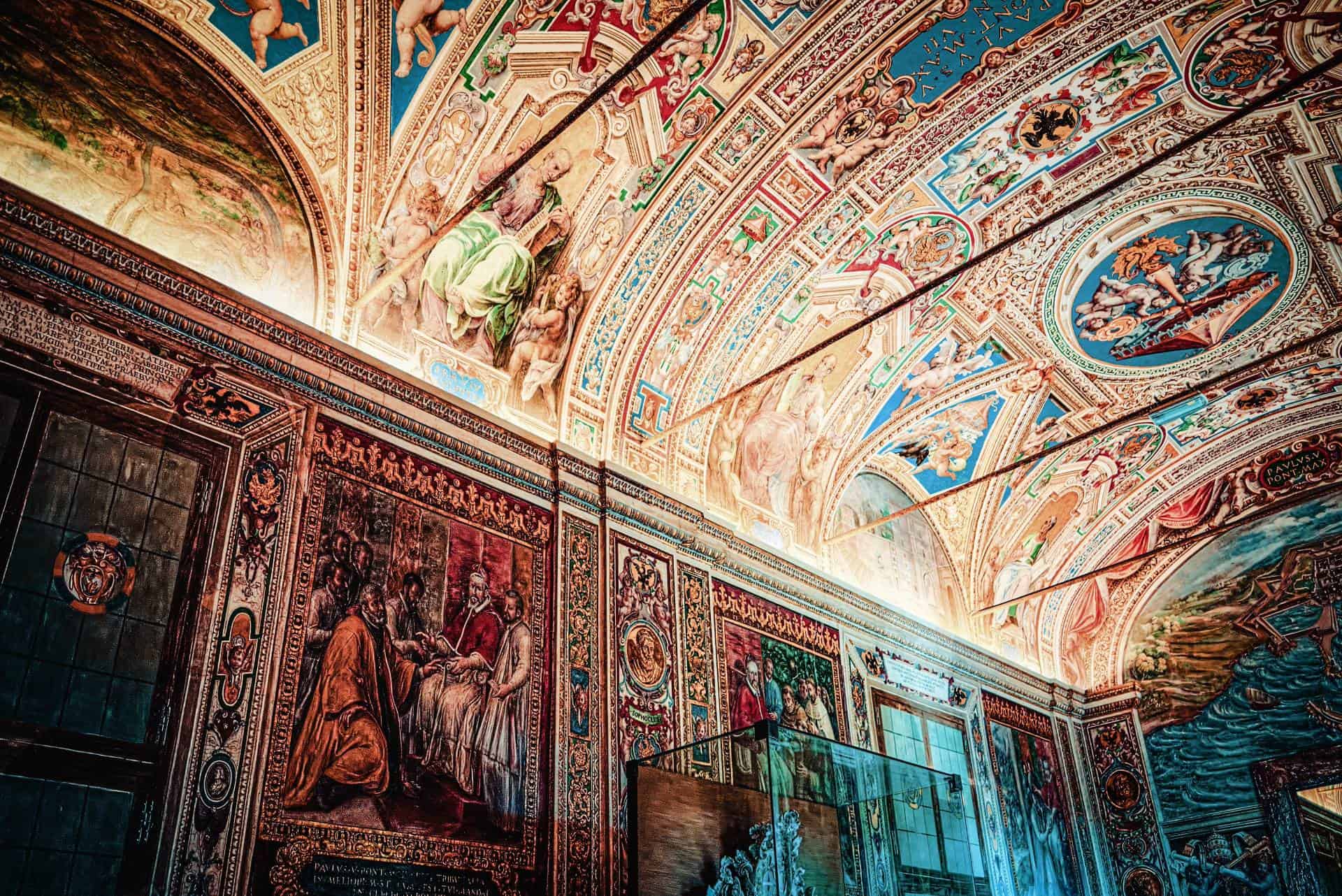
그리고 현대 종교 미술 컬렉션 in the 바티칸 박물관 is a fascinating and unique gallery dedicated to the works of contemporary artists who explore themes of spirituality and religion. Established in 1973 under Pope Paul VI, the collection features over 800 pieces, including paintings, sculptures, and graphic art by renowned 20th-century artists such as Van Gogh, Gauguin, Dalí, Chagall, and Francis Bacon. The gallery bridges the gap between traditional religious art and modern artistic expression, offering a fresh perspective on faith and devotion in a contemporary context. The collection showcases how modern artists have interpreted religious themes, making it a captivating stop for visitors interested in both modern art and religious history.
Vatican Modern Religious Art
유용한 정보
영업 시간:
- 월요일 - 토요일: 오전 9시부터 오후 6시까지(오후 4시 입장 마감).
- 매월 마지막 주 일요일: 오전 9시부터 오후 2시까지 무료 입장(입장 마감은 오후 12시 30분).
- 휴무일: 일요일(매월 마지막 일요일 제외) 및 크리스마스, 부활절과 같은 특정 종교 공휴일.
티켓:
- 긴 줄을 서지 않으려면 미리 온라인으로 티켓을 구매하는 것이 좋습니다.
- 대기 시간을 줄이기 위해 시간 지정 입장권을 예약할 수 있습니다.
- 어린이, 학생, 단체는 할인 혜택을 받을 수 있습니다.
- 오디오 가이드와 가이드 투어는 다양한 언어로 제공됩니다.
찾아가는 방법
The Collection of Modern Religious Art is located within the Vatican Museums, specifically housed in a series of rooms near the Sistine Chapel.
역사
The Collection of Modern Religious Art in the Vatican Museums is rooted in a specific decision: to rebuild a relationship between the Church and contemporary artistic culture. The Vatican Museums describe the Collection of Modern and Contemporary Art as emerging from Paul VI’s desire to reinstate this dialogue, and they place its public inauguration on 23 June 1973.
The same Vatican account explains that the collection was built through donations, paintings, sculpture, and graphic arts, by artists, collectors, and institutions, with many contacts linked to Paul VI’s address to the art world during an encounter in the 시스티나 성당 on 7 May 1964. In that address, the pontiff highlighted the distance that had opened between the Church and contemporary art and expressed the hope of bringing them closer again, with the outcome being the constitution of a collection focused on contemporary religious art.
Over roughly a decade, this initiative expanded a smaller nucleus of nineteenth-century works and grew into a large body of modern material. Today, the Vatican states, the collection numbers around 8,000 works, while the selection displayed to the public offers a broad overview of twentieth-century Italian and international art, including major figures such as Van Gogh, Bacon, Chagall, de Chirico, Fontana, Burri, and Matisse.
This history explains why the experience feels so different inside the Vatican: it is not simply a “modern wing,” but an intentional statement about continuity—how sacred themes can persist even as artistic languages change. It is also why the collection’s placement along the Vatican itinerary matters: it becomes a bridge between Renaissance tradition and the Vatican’s most iconic spaces, offering visitors a fuller, more layered view of how art and belief have continued to speak to each other across time.
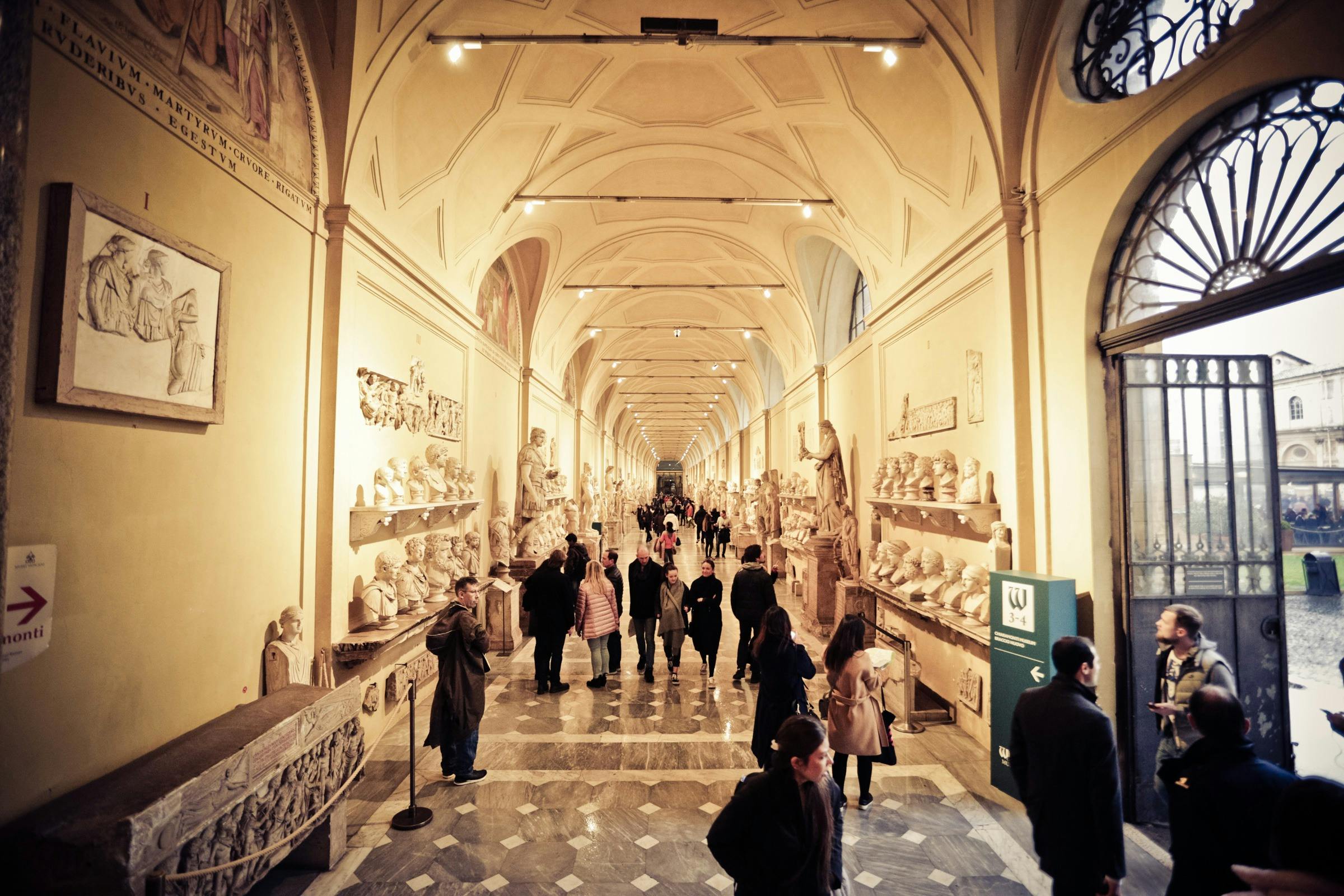
The Collection of Modern Religious Art in the Vatican Museums is rooted in a specific decision: to rebuild a relationship between the Church and contemporary artistic culture. The Vatican Museums describe the Collection of Modern and Contemporary Art as emerging from Paul VI’s desire to reinstate this dialogue, and they place its public inauguration on 23 June 1973.
The same Vatican account explains that the collection was built through donations, paintings, sculpture, and graphic arts, by artists, collectors, and institutions, with many contacts linked to Paul VI’s address to the art world during an encounter in the 시스티나 성당 on 7 May 1964. In that address, the pontiff highlighted the distance that had opened between the Church and contemporary art and expressed the hope of bringing them closer again, with the outcome being the constitution of a collection focused on contemporary religious art.
Over roughly a decade, this initiative expanded a smaller nucleus of nineteenth-century works and grew into a large body of modern material. Today, the Vatican states, the collection numbers around 8,000 works, while the selection displayed to the public offers a broad overview of twentieth-century Italian and international art, including major figures such as Van Gogh, Bacon, Chagall, de Chirico, Fontana, Burri, and Matisse.
This history explains why the experience feels so different inside the Vatican: it is not simply a “modern wing,” but an intentional statement about continuity—how sacred themes can persist even as artistic languages change. It is also why the collection’s placement along the Vatican itinerary matters: it becomes a bridge between Renaissance tradition and the Vatican’s most iconic spaces, offering visitors a fuller, more layered view of how art and belief have continued to speak to each other across time.

자세히 보기
리뷰
A Surprising Blend of Modernity and Faith – Sarah H.
"I wasn't expecting to find such a large collection of modern art in the Vatican Museums, but the Collection of Modern Religious Art was a wonderful surprise! Seeing works by artists like Van Gogh and Dalí, all focused on spiritual themes, was truly inspiring. It provides a different perspective on religious art, blending modern styles with deep spiritual messages. A must-see for art lovers who appreciate both traditional and contemporary art!"
A Hidden Gem in the Vatican Museumsà - Tom G.
"The Collection of Modern Religious Art is a fantastic addition to the Vatican Museums. It's located near the Sistine Chapel, and after seeing so much classical art, this gallery offers a refreshing contrast with modern pieces. The works by artists like Chagall and Bacon are thought-provoking and beautifully displayed. It’s not as crowded as other areas, so you can take your time to really appreciate the art. Highly recommended for anyone interested in modern interpretations of faith."
A Modern Take on Religious Themes – Emily R.
"This collection really caught me off guard in the best way possible. The Vatican is famous for its classical art, but the Collection of Modern Religious Art shows how contemporary artists have engaged with spiritual themes in a modern context. The variety of styles and artists is impressive, and the location near the Sistine Chapel makes it a great spot to reflect after seeing the Renaissance masterpieces. It’s a refreshing and meaningful stop on the museum tour."
팁
Don’t save modern art for when you’re exhausted. Many visitors push everything to the end, then reach quieter collections when their attention is gone. Flip the logic: build this section into the earlier part of your route, before fatigue sets in. You’ll look longer, notice more, and the rest of the Vatican day will feel more coherent because you’ve already had one deep, memorable stop.
Protect your entry with the right clothing and a light bag. The Vatican dress code (covered shoulders and knees) and airport-style security can derail your calm if you’re unprepared. Wear compliant clothing, keep bags minimal, and arrive early. If your first 30 minutes are stressful, you’ll carry that stress into the museum and speed-walk past the modern rooms. A calm entry is the simplest way to buy yourself better art time.
Use a three-step viewing habit. Start from a distance and read the whole composition. Move closer and focus on one face and one hand (or one recurring symbol) because that’s where intention often lives. Step back again and notice what changes when you return to the whole. Repeat this with just two works and you’ll remember the collection far more clearly than if you try to “cover” every room.
Make it your planned “slow chapter”. The Vatican Museums reward planning. Decide in advance that the Collection of Modern Religious Art is where you slow down on purpose, even if it’s only 15 minutes. Do one pass to see what’s there, then choose one artwork to return to for a second look. Modern works often land on the second viewing, when your eye is less busy trying to “categorize” and more open to mood, symbolism, and form.